


Anti-inflammatory foods for runners is a phrase that covers a lot of nonsense and a little good science. This is the part worth your money.
No single food is anti-inflammatory on its own. What helps runners is the overall pattern: oily fish twice a week, plenty of colourful plants, wholegrains, and a few well-studied extras such as tart cherry and curcumin. The NHS Eatwell Guide is the foundation, and the extras only earn their place on top of it.
Key takeaways
- Inflammation after running is part of how you adapt, so the goal is managing it sensibly rather than stamping it out.
- The dietary pattern does most of the work. Oily fish, colourful plants, wholegrains, olive oil, and nuts, eaten consistently.
- Tart cherry and curcumin are the two extras with the most credible running-specific evidence behind them.
- Timing matters far less than people think. What you eat across the week beats what you eat in the hour after a run.
Why do runners care about inflammation in the first place?
Because running, especially long or downhill running, causes the kind of muscle damage that triggers an inflammatory response, and that response is what makes you stiff for a day or two afterwards.
Inflammation is defined as the body's repair and defence response to damage or stress, involving increased blood flow and immune activity in the affected tissue. After a hard run, it's doing a job you want done.
The problem isn't inflammation itself. It's when training load consistently outruns recovery, so you're never quite clearing one session before starting the next. Our piece on the truth about inflammation and running makes that case properly.
So the aim isn't to eliminate it. It's to eat in a way that supports repair, keeps you healthy across a training block, and takes the edge off the worst of the soreness.
Which anti-inflammatory foods for runners have evidence behind them?
The strongest evidence is for the overall pattern rather than any hero ingredient, with two or three specific extras worth knowing about.
Start with the base. The NHS Eatwell Guide sets out the proportions, and for runners that means enough carbohydrate to fuel the work, protein spread across the day, and a genuine variety of plants rather than the same three vegetables.
Oily fish is the one with the clearest mechanism. The British Dietetic Association's omega-3 guidance recommends two portions of fish a week, one of them oily, and that's a sensible target for anyone running regularly.
Tart cherry has the best running-specific data. A trial in marathon runners found that Montmorency cherry juice taken around the race improved recovery of muscle function and reduced inflammatory markers. That work came out of Northumbria University, and it's held up as one of the more useful findings in the field.
Nitrate-rich vegetables sit slightly to one side of inflammation, since their main studied effect is on the oxygen cost of exercise rather than on repair. Worth eating anyway, and worth knowing the difference.
| Food | What it brings | How good is the evidence |
|---|---|---|
| Tart cherries | Anthocyanins | Best runner-specific trial data of the group |
| Turmeric with black pepper | Curcuminoids | Pooled trial data on soreness and muscle damage |
| Berries, beetroot, dark leaves | Polyphenols, nitrates | Good, though effects are modest and mostly pattern-level |
| Extra virgin olive oil, nuts | Unsaturated fats, polyphenols | Strong as part of an overall dietary pattern |
| Wholegrains and pulses | Fibre, slow carbohydrate | Foundational rather than dramatic |
Notice what isn't on that list. Very high doses of isolated antioxidant vitamins have been studied for interfering with the training adaptations you're chasing, which is a good reason to get this from food rather than from a megadose capsule.
Where does turmeric fit for runners?
It's one of the better-supported extras, and it's most useful taken daily rather than saved for after a long run.
Downhill running is precisely the kind of eccentric work the curcumin trials were built around, and across ten of them the picture is consistent: less soreness, lower muscle damage markers, better range of motion. We've set that evidence out in full in our guide to turmeric for muscle soreness.
The catch is that curcumin is only around 3% of turmeric root, and it's poorly absorbed on its own. Black pepper and a little fat change that considerably, which is why a spoon of powder in a hot drink doesn't reproduce what the trials tested.
We've added to it as well, with a footballer trial that found lower inflammation and less soreness after matches. We funded it and did not influence the findings.
How to build this into a running week
Make it structural rather than something you remember on Sundays. The pattern is what counts.
Put oily fish in twice a week and stop thinking about it. Keep frozen berries and tinned pulses in - the plan that survives a wet Tuesday in February is the one built on things you already have!
Around long runs, prioritise getting carbohydrate and protein in reasonably soon afterwards. The British Dietetic Association's sport and exercise nutrition guidance suggests starting to refuel as soon as you practically can, particularly when the next session is close.
Anything you're taking for its supportive effect, turmeric included, works on a daily rhythm rather than a reactive one. Our guide to the best time to take turmeric covers how to slot it in, and 7 ways to recover better after running covers the non-food side.
The takeaway
Eat the pattern, not the headline. Oily fish twice a week, a genuine spread of plants, enough carbohydrate for the running you're actually doing, and protein across the day will do more for how you feel at mile 18 than any single ingredient.
Then add the extras that have earned it. Turmeric is one of them, and the only real question is whether you'll take it consistently in a form your body can absorb. A jar of powder in the cupboard rarely survives marathon block fatigue.
Which is the argument for Raw Turmeric Original. It's cold-crushed rather than cooked down, the black pepper mix is already in it, and drinking one takes about four seconds on your way out of the door. The fresh fruit in it carries the nutrients and brings benefits of its own, which is not something the concentrated apple and orange juice propping up cheaper shots can claim. If long runs leave your knees and ankles complaining more than your quads, Raw Turmeric & Ginger is the one to reach for.
One a day, through the block. If you're managing an injury or a health condition, talk to your GP before adding supplements.
Frequently asked questions
What are the best anti-inflammatory foods for runners?
Oily fish twice a week, tart cherries around hard efforts, turmeric with black pepper taken daily, and a wide spread of colourful plants, wholegrains, nuts, and olive oil. No single one of those is doing much on its own. The pattern across a week is what shows up in how you feel and how consistently you can train.
Should runners try to reduce inflammation after every run?
No. The inflammatory response after running is part of how your body repairs and adapts, so blunting it aggressively after every session works against what you're training for. Aim to support recovery through food, sleep, and sensible load rather than trying to shut the response down.
Does tart cherry juice really work for runners?
It has the best runner-specific evidence of the popular options. A trial in marathon runners found Montmorency cherry juice around the race improved recovery of muscle function and reduced inflammatory markers. It's most often used around a race or a very hard block rather than every day of the year, partly because of the sugar load.
How much turmeric should a runner take?
Follow the serving on the pack of whatever you use, and take it daily rather than only after long runs, since that's how the trials were run. For scale rather than as a target, EFSA's acceptable daily intake for curcumin is about 3mg per kilo of body weight, roughly 210mg for a 70kg adult, and refers to the purified additive.
Can anti-inflammatory foods replace rest days?
They can't. Rest is where the repair happens, and no combination of food does that job. What good nutrition does is make the rest you take more productive and help you turn up to the next session in better condition. If you're persistently sore, flat, or sleeping badly, the answer is usually load, not lunch.
Is it better to get these nutrients from food or supplements?
Food first, every time, and UK dietary guidance takes the same line. Very high doses of isolated antioxidants have been studied for interfering with training adaptation, which whole foods don't do. Supplements are worth considering when something is genuinely hard to get in useful amounts from your plate, which is the honest case for concentrated turmeric.

Raw Turmeric Original Shot Box
Our Original Turmeric Shot packs a real punch thanks to a whopping 35g of fresh raw turmeric root used to make each shot.
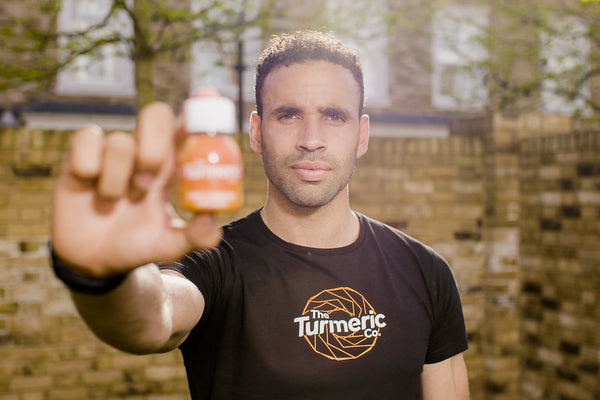
The Hal Robson-Kanu Guide To Fitness & Nutrition
Gain exclusive insight into habits that will make every day a healthy and fulfilling one.