


If you train regularly but sleep badly, you are quietly undoing some of your hard work.
Sleep is the most important recovery window you have. It is when your body carries out the bulk of its repair to muscle and connective tissue, restocks energy, and rebalances the systems that keep inflammation in healthy check. No shot, stretch or ice bath can stand in for it.
The encouraging part is that better sleep is mostly about routine and environment, and a handful of simple habits can make a real difference to how recovered your body feels.
What happens to your body while you sleep
During deep sleep your body shifts into a strongly restorative state.
Growth hormone is released in greater amounts, the rate of tissue repair rises, and the glycogen you burned through during the day is replenished. This repair applies to the joints and connective tissue that take load during training, not only to muscle.
In effect, much of the adaptation you trained for is banked overnight rather than during the session itself, which is why recovery specialists increasingly treat sleep as a training variable in its own right.

Sleep, recovery and the inflammatory response
Inflammation is a normal, useful part of how the body responds to training stress, but it is meant to settle. Sleep is one of the levers that helps it do so.
A large systematic review and meta-analysis of more than fifty thousand people found that disturbed sleep was associated with higher levels of inflammatory markers such as C-reactive protein and interleukin-6.
A separate performance review linked sleep deprivation to slower recovery and impaired function.
Persistently poor sleep can leave the body in a low-grade inflammatory state that makes joints and muscles feel stiffer and slower to bounce back.
How much sleep, and how to protect it
Most adults function best on seven to nine hours, and quality counts as much as quantity.
The fundamentals are unglamorous but effective: a consistent bedtime and wake time, a cool and dark room, and a screen-free wind-down so your nervous system can settle.
If you train in the evening, allow time for your body temperature and heart rate to come back down before you try to sleep. These basics tend to matter far more than any tracker, and they cost nothing to put in place.
Calming the body before bed
A settled nervous system drifts off more easily, so a calming pre-bed ritual is worth building, whether that is gentle mobility, slow breathing or a warm shower.
Magnesium contributes to muscle and nervous-system function and turns up in everyday foods such as leafy greens, beans, wholegrains and seeds; there is more in our guide to magnesium and muscle function.

Keeping a consistent wind-down, night after night, tends to do more for recovery than any single tweak.
For a daily recovery habit that supports muscles and joints alike, many people anchor their routine with a cold-pressed shot such as our Raw Turmeric Original Shot Box or Raw Turmeric & Ginger Shot Box.
Protect your sleep and the rest of your recovery, joints included, falls into place far more easily.

Raw Turmeric Original Shot Box
Our Original Turmeric Shot packs a real punch thanks to a whopping 35g of fresh raw turmeric root used to make each shot.
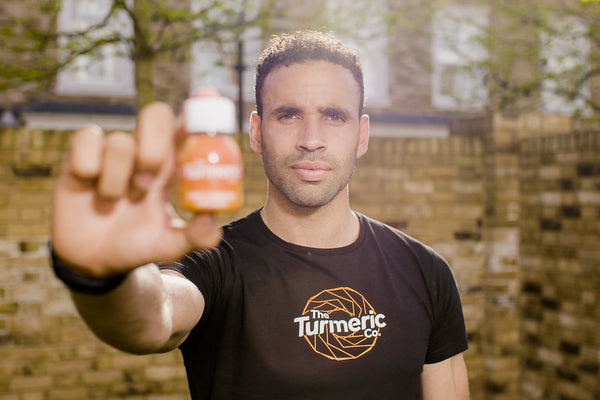
The Hal Robson-Kanu Guide To Fitness & Nutrition
Gain exclusive insight into habits that will make every day a healthy and fulfilling one.