


The short answer is: far less than you think. And what it is actually doing for your mouth might surprise you.
I am a dentist. I have spent over 30 years looking inside people's mouths, and I can tell you that the turmeric staining question comes up more than almost anything else. Patients love their golden lattes, their curries, their daily wellness shots and then they sit in the chair and ask, slightly guiltily, whether they should stop.
The answer is no. And once you understand what's really going on, I think you'll feel a lot better about your morning ritual.
Let's talk about what staining actually is
Your teeth are covered in enamel, the hardest substance in the human body. On top of that sits a thin protein film called the acquired pellicle, which forms naturally from saliva and acts as a protective layer.
When food and drink leave a mark on your teeth, they're mostly sitting in that film, not soaked into the enamel itself. Dentists call this extrinsic staining, and it's the same category as tea, coffee and red wine.
Crucially, extrinsic staining is surface-level and entirely reversible. A good hygienist removes it in minutes.
Turmeric is a pigment, no question. Curcumin, the active compound that gives it that brilliant golden colour, is potent enough that we dentists actually use it clinically to detect dental plaque. It stains the otherwise invisible biofilm yellow so patients can see exactly where they've missed when brushing (Umapathy et al., 2022).
So yes, it colours things. The question is whether occasional dietary consumption is meaningfully different from applying it directly to your teeth.
Spoiler: it is.
The staining fear is mostly about context
Eating turmeric in food or taking a daily shot is not the same as painting it onto your enamel. When you consume turmeric normally, the contact time with your teeth is brief, and saliva, which is doing a remarkable amount of work in your mouth at all times, helps clear it quickly.
Research backs this up. Turmeric consumed as part of a normal diet, alongside decent oral hygiene, rarely causes lasting discolouration.
The people who notice more staining tend to be those applying turmeric paste directly to their teeth and leaving it there, often under the misguided belief that it whitens. It doesn't, and leaving any concentrated pigment in contact with enamel for extended periods is never going to end well.
For what it's worth, enamel in good condition is smooth and less porous, which means pigment struggles to stick. It's acid erosion from fizzy drinks, citrus fruits, and wine that opens up microscopic channels and makes staining from anything, not just turmeric, more likely.

Here's the thing about turmeric and your mouth
While everyone's been worrying about the colour, the research has been quietly building a case that curcumin is genuinely good for oral health.
Studies have found that a curcumin-based mouthwash performs comparably to chlorhexidine, the gold-standard antiseptic rinse your dentist prescribes, in reducing plaque and gum inflammation.
That's a remarkable finding for a natural compound! And unlike chlorhexidine, which famously causes its own tooth staining as a side effect and leaves a nasty lingering taste, curcumin has an excellent safety profile and tastes great.
Research has also shown that curcumin solution used as an irrigant, rinsed into the space between tooth and gum, produces reductions in inflammation and pocket depth in patients with gum disease.
Its antimicrobial properties have been documented across a wide range of oral conditions, from recurrent mouth ulcers to precancerous lesions.
In other words: the compound people are worried might be staining their teeth is the same one being researched for its capacity to protect their gums, fight bacteria, and support oral health.
A few simple habits make any concern disappear
I wouldn't be doing my job if I didn't give you the practical bit. The good news is it's straightforward.
1. Rinse your mouth with water after your turmeric shot
That's genuinely most of it. It reduces the contact time and clears the pigment before it gets a chance to settle.
2. Wait before brushing if your shot contains something acidic
If your shot contains something acidic, lemon juice for instance, wait about 30 minutes before brushing rather than going straight for your toothbrush. Enamel softens slightly after acid exposure, and brushing too soon can cause more harm than the turmeric ever would.
3. Use a fluoride or hydroxyapatite toothpaste and a medium brush
This strengthens enamel and makes it less porous, which helps with any kind of staining, turmeric included.
4. See your hygienist regularly
A professional clean twice a year handles any surface discolouration and keeps your mouth in the best possible condition.
That's it. Four habits, and the staining question becomes irrelevant.
The bottom line
Turmeric's reputation for wrecking your smile is a myth that's grown bigger than the evidence behind it. For the overwhelming majority of people drinking it daily as part of a wellness routine, the staining risk is minor, manageable, and a poor reason to give up something with genuine benefits for your health.
As a dentist, I'm far more interested in curcumin's documented anti-inflammatory and antimicrobial effects on the gum tissue I can see than I am in a surface stain I can polish away in minutes.
Keep drinking your shots. Rinse afterwards. Come and see your hygienist. That's the whole advice.
Dr James Goolnik is a dentist and founder of Optimal Dental Health.

Raw Turmeric Original Shot Box
Our Original Turmeric Shot packs a real punch thanks to a whopping 35g of fresh raw turmeric root used to make each shot.
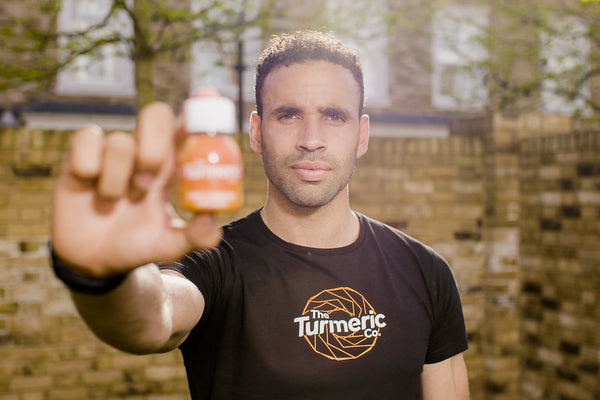
The Hal Robson-Kanu Guide To Fitness & Nutrition
Gain exclusive insight into habits that will make every day a healthy and fulfilling one.