


Turmeric for recovery is one of the few wellness habits with real trial data behind it. Here's what it does, what it doesn't, and how to fit it into a training week.
Curcumin, the compound turmeric is studied for, has been looked at repeatedly for the soreness and inflammation that follow hard exercise. A 2022 meta-analysis pooling ten randomised controlled trials found it eased muscle soreness and lowered markers of muscle damage. The catch is absorption, which is why the form you take it in matters as much as the amount.
Key takeaways
- Recovery is when training actually pays off, and turmeric sits on top of sleep, food, and sensible load, never in place of them.
- The evidence is strongest around post-exercise soreness and inflammation, which is exactly where the research has concentrated.
- Curcumin is poorly absorbed on its own, so black pepper, fat, and whole raw root do more for you than a spoonful of powder.
- Consistency beats intensity. A daily shot you actually finish the week with will do more than a big dose you take twice.
What does turmeric for recovery do?
Recovery is defined as the period after exercise when your body repairs the damage training caused and adapts to it, coming back slightly better prepared than before. Turmeric doesn't do the repairing. It sits alongside the process and may help with the discomfort that comes with it.
The active compounds are the curcuminoids, and curcumin is the one most of the research follows. It makes up only around 3% of turmeric root, which is the first clue that a sprinkle of spice isn't the same thing as a studied dose.
Inflammation after a hard session isn't a fault. It's part of how your body signals that repair is needed. The problem is when it drags on, or when it's heavy enough that you skip the next session.

That's the window researchers have been curious about, and it matters as much to someone chasing a marathon time as to someone who wants to get up the stairs without wincing after leg day.
Why you ache after a hard session
Soreness that arrives a day or two after unfamiliar training is delayed onset muscle soreness, and it comes from the microscopic damage of eccentric work: the lowering half of a lift, the braking of a downhill run.
Your body responds with an inflammatory clean-up, which is useful and also why you feel stiff. The NHS sets out how to manage ordinary muscle strains at home, and anything sharp, swollen, or lasting is a conversation for your GP rather than a supplement.
Most of the difference in how you feel comes from the basics: sleeping properly, eating enough, and building load gradually. The NHS physical activity guidelines are the sensible floor to build from.
What does the research on turmeric and recovery show?
The most consistent findings sit around soreness and inflammatory markers after exercise, and the picture is encouraging rather than settled.
A 2022 systematic review and dose-response meta-analysis in Phytotherapy Research pooled ten randomised controlled trials and found curcumin supplementation reduced muscle soreness, lowered creatine kinase, and improved range of motion after hard exercise. An earlier controlled trial reached a similar conclusion on pain, with some signal on getting performance back.
We've contributed to that literature ourselves. We partnered with independent researchers at Nottingham Trent University, who ran a trial in 24 elite male footballers taking two Raw Turmeric Original shots a day. Players showed lower CRP, a marker of inflammation, at 64 hours after a match, and reported less muscle soreness. We funded the work and did not influence the findings.
On joints rather than muscles, Arthritis UK counts more than 20 clinical trials of turmeric and curcumin, and makes the same point about absorption that we do.
| What people ask turmeric to do | Where the evidence stands |
|---|---|
| Ease post-exercise muscle soreness | Strongest area, supported across randomised trials |
| Lower inflammatory markers after hard training | Supported, including in our own trial with professional footballers |
| Support joint comfort | An active research area with 20-plus trials |
| Restore strength faster after damage | Mixed, some signal, not settled |
| Replace sleep, food, or sensible training load | No. Nothing does |
How much turmeric for recovery do you need, and in what form?
In short - enough to matter, in a form your body can absorb, taken often enough to count. Those three things are usually the whole answer. Here's how each one works in practice.
Curcumin on its own is poorly absorbed and cleared quickly, and black pepper is what changes that. The piperine in it slows that clearance right down, and the research that first measured the effect found the difference was substantial. That's exactly why our trade-secret BioMax Uptake Blend® is built into every shot rather than left to chance, and why a spoonful of powder on its own can't do the same job.
Fat helps too, since curcumin dissolves in fat rather than water. Taking yours with breakfast gives it something to travel with.

This is where powder earns an honest place, and where it doesn't. Turmeric powder is wonderful for flavour and colour in a curry or a traybake. It isn't a reliable route to a meaningful daily dose of recovery support, because it's an ultra-processed, dried ingredient stirred into something hot with none of the absorption support built in.
For scale rather than as a target, EFSA's acceptable daily intake for curcumin is about 3mg per kilo of body weight, roughly 210mg for a 70kg adult, and that figure refers to the purified additive. Our turmeric dosage guide goes through this properly, and turmeric bioavailability covers the absorption side.
How to build turmeric for recovery into your week
Take it daily, at a time you'll keep to, and give it a proper run of weeks rather than judging it after one hard session.
Most people find first thing works, with or just after breakfast, so the fat in the meal lends a hand and the habit is done before the day gets away from them. Our guide to the best time to take turmeric weighs up morning against evening.
A turmeric shot is usually a small drink of raw turmeric root blended with fruit and black pepper. How it's made matters. Some shots are built from turmeric juice, powder, or concentrate rather than the whole raw root, which can mean fewer of turmeric's naturally occurring compounds, so it's worth reading the ingredients before you commit to a box.
Raw Turmeric Original is the one that professional footballers used in our independent clinical trial: a cold-crushed watermelon-based blend with raw turmeric root, magnesium, and vitamin C, finished with our trade-secret BioMax Uptake Blend® which includes black pepper. Fresh fruit isn't filler here. It carries the nutrients, offers benefits of its own, and makes a strong dose of raw root drinkable in one go. Low-quality bases like concentrated apple and orange juice are what add unnecessary sugars.
If your training is heavy on impact and your joints feel it, Raw Turmeric & Ginger leans into mobility support with added vitamin C and magnesium. If you're a ginger superfan, Raw Turmeric & XTRA Ginger turns up the heat with 25g of raw turmeric and ginger root in every bottle.
The takeaway
Get the basics right first. Sleep, enough food, and a training load that climbs sensibly will always do more for your recovery than any supplement, and nothing on this page changes that.
Once those are in place, turmeric is a sensible addition with real trial data behind it, and the format is what decides whether you get any of it. Raw root with a measured amount of black pepper, drunk in one go, is a habit you'll still be keeping in six weeks. A jar of powder in the cupboard usually isn't.
Start with Raw Turmeric Original, take one a day, and judge it over a training block rather than a session. If you're on medication or managing a health condition, have a quick word with your GP first.
Frequently asked questions
Does turmeric really help with recovery?
The evidence is most consistent for post-exercise muscle soreness and inflammatory markers, where a 2022 meta-analysis of ten randomised trials found a benefit. Our own trial with elite footballers found lower inflammation at 64 hours after a match and less reported soreness. It's supportive rather than transformative, and it works best on top of good sleep and sensible training.
How long does turmeric take to work for recovery?
Most people are looking at weeks rather than days, because the supportive effects build with consistency. Trials in this area typically run for several weeks of daily supplementation. Give it a full training block before you decide, and keep the dose daily rather than saving it for hard sessions. Our guide to how long turmeric takes to work covers the timelines.
Should I take turmeric before or after training?
Consistency matters more than timing, so pick the slot you will actually keep. Many people take theirs with breakfast, since a little fat in the meal supports absorption and it gets the habit out of the way. There's no strong evidence that dosing right after a session beats simply taking it every day.
Does turmeric blunt training adaptations the way high-dose antioxidants can?
This is a fair question, since very high doses of isolated antioxidant vitamins have been studied for interfering with adaptation. Turmeric at food and shot levels is a different proposition, and the trials in this area have generally reported reduced soreness without reporting blunted gains. The evidence is still developing, so treat a whole-food dose as sensible and megadosing as unnecessary.
Is turmeric powder good enough for recovery?
For flavour and cooking, powder is excellent. As a route to a meaningful daily dose of recovery support it falls short, because it's dried and ultra-processed, curcumin is only a small fraction of the root, and there's usually no black pepper or fat alongside it to help absorption. Fresh versus powdered turmeric compares the two forms directly.
Is it safe to take turmeric every day?
Turmeric is generally well tolerated as part of a daily routine, with minor digestive upset the most commonly reported side effect. If you're pregnant, taking blood thinners, or managing a health condition, speak to your GP before starting. Our turmeric side effects guide sets out who should be more careful.

Raw Turmeric Original Shot Box
Our Original Turmeric Shot packs a real punch thanks to a whopping 35g of fresh raw turmeric root used to make each shot.
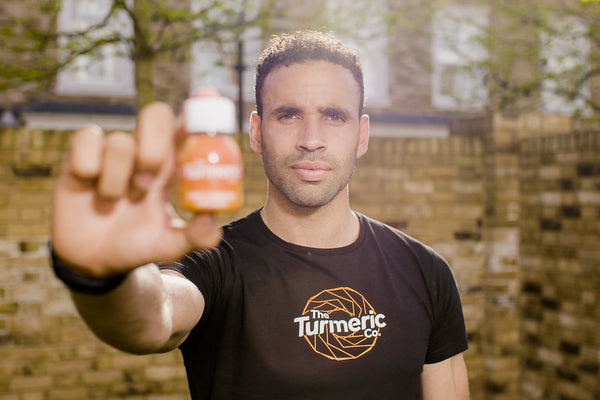
The Hal Robson-Kanu Guide To Fitness & Nutrition
Gain exclusive insight into habits that will make every day a healthy and fulfilling one.