


Turmeric for inflammation is the claim everything else rests on. It's also the one most often stated without anyone explaining the mechanism.
Inflammation is the immune system's repair response, useful in the short term and a problem when it persists. Curcumin has been studied for its effect on signalling molecules involved in that response, and trials measure it through blood markers such as CRP and IL-6. The effects reported are real but moderate.
Key takeaways
- Inflammation is not the enemy. It's how your body heals, and shutting it down completely would be a terrible idea.
- The problem is inflammation that stays switched on, which is what the research is interested in.
- Curcumin appears to influence inflammatory signalling, and trials track this through CRP and IL-6 in the blood.
- A marker moving in a trial is encouraging, not the same as a health outcome changing. Both things can be true.
What is inflammation, and when does it stop being useful?
Inflammation is defined as the immune system's response to injury, infection, or irritation, sending blood, fluid, and immune cells to the affected area to deal with the problem and repair the damage.
Cut your finger and you see it work: redness, heat, swelling, tenderness. That's the acute version, it's doing its job, and it resolves - exactly as it should!

The version researchers worry about is chronic and low-grade: the response never quite switches off, running quietly in the background for months or years. That's the state associated with a range of long-term conditions, and it's what most "anti-inflammatory" claims are aiming at.
Worth being clear about the difference, because a lot of wellness copy blurs the two and ends up implying that ordinary healing is something to suppress.
For how this plays out in aching joints specifically, see turmeric for joints.
How does turmeric for inflammation work in practice?
Through curcumin's interaction with the signalling molecules that keep the inflammatory response running, rather than by blocking pain the way an anti-inflammatory drug does.
The body regulates inflammation through messengers called cytokines, and through signalling pathways that switch inflammatory genes on and off. Laboratory work suggests curcumin interacts with several of these, which is why it became interesting to researchers in the first place.
In people, that gets measured indirectly. Trials look at blood markers: C-reactive protein, produced by the liver when inflammation is present, and interleukin-6, one of the cytokines involved in driving it.

A 2025 systematic review and meta-analysis in BMC Complementary Medicine and Therapies examined exactly this in people with knee osteoarthritis, pooling randomised trials of curcumin and serum inflammatory markers.
We've seen the same pattern in our own work. Independent researchers at Nottingham Trent University found lower CRP at 64 hours after a match in professional footballers taking two Raw Turmeric Original shots a day. We funded that clinical trial and had no hand in the findings.
| Marker | What it is | Why trials use it |
|---|---|---|
| CRP | A protein the liver makes when inflammation is present | Cheap, well understood, responds fairly quickly |
| IL-6 | A cytokine that helps drive the inflammatory response | Sits further upstream, closer to the mechanism |
| TNF-alpha | Another inflammatory signalling molecule | Common in laboratory work, harder to shift in people |
| Symptom scores | Pain, stiffness, function reported by participants | What the person actually notices |
That last row is the important one. A marker moving is a clue about mechanism. Whether someone's knee feels better is the question that matters, and the two don't always travel together.
Where the honest limits are
Curcumin is poorly absorbed, most laboratory findings use concentrations you'd struggle to reach by eating, and "anti-inflammatory" has become a marketing word as much as a scientific one.
Absorption first. Curcumin is roughly 3% of turmeric root, it's fat-soluble, and it's cleared by your digestive system quickly. Black pepper slows that clearance, which is why it appears in every serious preparation. Turmeric bioavailability covers the detail.

Then the gap between a petri dish and a person. Cell studies show curcumin doing striking things at concentrations that oral doses don't produce in human tissue, and a lot of confident internet claims come from that literature without the caveat.
The evidence is still developing, and it's developing in a direction we find encouraging enough to keep funding research into.
What else changes your inflammatory load
More than any supplement does: sleep, what you eat across a week, how much you move, smoking, and stress.
The NHS Eatwell Guide is a duller answer than a spice, and a more effective one. Oily fish twice a week, a genuine variety of plants, less ultra-processed food.
Regular activity is the other big lever, and the NHS physical activity guidelines set out what to aim for. Persistent poor sleep works against all of it.
Turmeric sits on top of that foundation. It's a reasonable addition, not a way around the boring parts.
The takeaway
The mechanism behind turmeric and inflammation is real, reasonably well described, and more modest than the marketing around it. Curcumin appears to influence inflammatory signalling, trials can measure that in the blood, and people in those trials report feeling somewhat better.
What it isn't is a switch. Inflammation is a system you support rather than something you turn off, and the foundations do most of the work.
If you want the curcumin part done properly, the form matters more than the dose on the label. Raw Turmeric Original is a cold-crushed watermelon-based blend of raw turmeric root with magnesium and vitamin C, finished with our trade-secret BioMax Uptake Blend®, which includes black pepper, and it's the shot used in the first footballer trial. One a day, alongside the sleep and the vegetables, is the version of this that works.
If you're managing a diagnosed inflammatory condition or taking medication for one, speak to your GP before adding anything.
Frequently asked questions
Is turmeric anti-inflammatory?
Curcumin, its main active compound, has been studied for effects on inflammatory signalling, and trials report reductions in blood markers such as CRP in some populations. That makes it a reasonable description of the research direction rather than a proven clinical effect. The effects are moderate and depend heavily on how well the curcumin is absorbed.
How long does turmeric take to reduce inflammation?
Trials measuring inflammatory markers usually run for several weeks to a few months of daily supplementation. There's no meaningful same-day effect to look for, so this is a habit rather than a treatment you reach for during a flare. Consistency over a couple of months is the fair test.
Does turmeric lower CRP?
Some randomised trials and pooled analyses report reductions in CRP with curcumin supplementation, including our own footballer study, which found lower CRP at 64 hours after a match. Results vary between populations and preparations, and a marker shifting isn't automatically the same as feeling better.
Is inflammation always bad?
No, and this is worth getting right. Acute inflammation is how your body fights infection and repairs damage, and you would be in serious trouble without it. The concern is chronic low-grade inflammation that persists for months or years. The aim is a balanced response, not the lowest possible number.
Can I get an anti-inflammatory effect from turmeric powder in food?
Powder is a good cooking ingredient and worth using for flavour, but curcumin is only a small fraction of the root, it's poorly absorbed on its own, and drying and processing don't help. The trials use concentrated preparations with absorption support built in, which is a different proposition from a pinch in a curry.
What's the difference between CRP and IL-6?
CRP is a protein your liver produces when inflammation is present, so it's a downstream signal that something is happening. IL-6 is a cytokine that helps drive the response, sitting closer to the mechanism itself. Trials often measure both, because each tells you something the other doesn't.
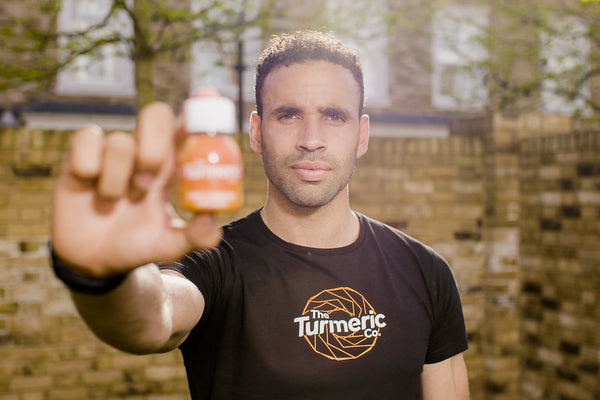
The Hal Robson-Kanu Guide To Fitness & Nutrition
Gain exclusive insight into habits that will make every day a healthy and fulfilling one.