


If you’re midway through a marathon training plan right now, you’re probably spending most of your mental energy thinking about mileage, pace, and whether your legs will cooperate on race day (we're sure they will!)
What you might not be thinking about is that the work you do between runs matters just as much as the runs themselves.
This blog makes the case for treating recovery as a core part of your training. We’ll walk through what actually happens to your body during heavy training, why inflammation is the thing most runners underestimate, and the recovery habits that can make the difference between arriving at the start line feeling strong and arriving injured.
The training plan is the easy part
Whether you’re building a half marathon training plan into a full marathon programme or still figuring out how to start running consistently, the structure is the straightforward bit. Apps, coaches, free guides: there’s no shortage of running plans to follow!
What those plans rarely spell out is what to actually do when you walk back through the door after a session. They’ll tell you to take a rest day without explaining what rest should look like when you’re asking your body to adapt to distances it’s never covered.
Muscle recovery after running isn’t passive. Every time you run, you create micro-tears in muscle fibres and trigger an inflammatory response.
That inflammation is natural and necessary - it’s how the body rebuilds stronger. But when you’re stacking sessions across a 16-week block, it can accumulate faster than your body clears it. That’s when stiffness becomes a niggle, and a niggle becomes an injury.
What does accumulated inflammation actually feel like?
It rarely announces itself dramatically. More often it shows up as:
-
A knee that’s stiff on Monday morning and doesn’t fully loosen up
-
Heaviness in your legs that hasn’t lifted by Wednesday’s tempo run
-
A tightness in your shin you keep telling yourself is fine
-
General fatigue that sleep doesn’t seem to fix
Runner’s knee, shin splints, and persistent joint stiffness are often the downstream result of inflammation that’s been left unmanaged for weeks.
Addressing it early, through sleep, nutrition, and genuine rest, is far more effective than scrambling to fix it during taper week.

Recovery habits that actually move the needle
Whether you’re a complete beginner exploring running for beginners content or a seasoned marathoner refining your approach, a few recovery fundamentals apply across the board.
-
Respect the post-run window
In the 30 to 60 minutes after finishing a run, your body is primed to absorb what it needs.
Protein (tofu, beans, nuts) and carbohydrates (oats, brown rice, potatoes) rightly get the most attention, but anti-inflammatory nutrition matters here too. Turmeric root has been linked to having natural anti-inflammatory properties; curcumin (an active compound in turmeric), also has been studied to potentially manage exercise-induced inflammation.
-
Treat rest days as active recovery days
Light walking, stretching, hydration, and prioritising sleep aren’t optional extras. They’re where the adaptation actually happens.
-
Listen to your body (honestly!)
There’s a difference between the discomfort of building fitness and the warning signs of an injury forming. If something doesn’t feel right across two or three consecutive runs, it probably isn’t.

Looking after the bits that get you to the finish line
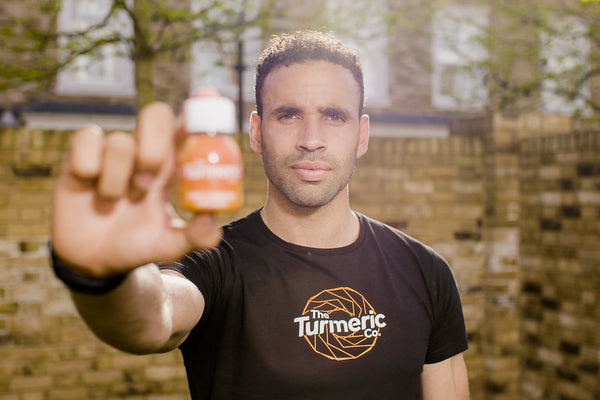
Our founder, Thomas 'Hal' Robson-Kanu, spent 15 years in professional football, and the single biggest lesson he took from that environment was this: the athletes who lasted weren’t always the most talented. They were the ones who respected recovery.
This April, we’re doing something a bit different at the London Marathon. We’re sponsoring runners’ knees, because we think the body parts doing the actual work deserve some recognition - keep an eye on our website to sign up!
Right now, the thing that matters most is how you’re treating your body between sessions.
The miles will take care of themselves. Recovery is where the real work gets done.

Raw Turmeric & Beetroot Shot Box
This Turmeric Shot fused with Beetroot is a real powerhouse of a shot.
The Hal Robson-Kanu Guide To Fitness & Nutrition
Gain exclusive insight into habits that will make every day a healthy and fulfilling one.