


Turmeric porridge sounds like something invented for a photograph, and it is actually one of the few places turmeric belongs in a British breakfast without anyone having to pretend.
Oats are bland, warm, and fatty enough to carry a spice properly, which is what turmeric needs. Half a teaspoon of ground turmeric into 50g of oats and 300ml of whole milk gives colour and warmth for pennies. What it will not give you is a meaningful daily amount of turmeric.
Key takeaways
- Half a teaspoon of ground turmeric per portion is the ceiling before it turns bitter.
- Fat is doing the work. Curcumin is fat soluble, so whole milk or a spoon of nut butter matters.
- Black pepper belongs in it for flavour, and its absorption effect is smaller than usually claimed.
- Ground turmeric here is a flavour ingredient, not a route to a meaningful daily dose.
- Oats bring their own case: NHS guidance puts wholegrain starchy foods at the base of a good diet.
How do you actually make turmeric porridge?
Bloom the spice in the fat first, then cook the oats. Stirring powder into finished porridge is why most attempts taste dusty.
The technique is the whole thing, and it takes an extra thirty seconds. Warm your milk or a knob of butter in the pan, add the turmeric and pepper, and let it sit for half a minute before the oats go in. Ground spices are fat soluble and they need a moment in something fatty to release properly. Added at the end, they stay powdery and taste raw.
| Ingredient | Per portion | Why |
|---|---|---|
| Rolled oats | 50g | The base, and a wholegrain |
| Whole milk or oat milk | 300ml | Fat carries the spice and the curcumin |
| Ground turmeric | Half a teaspoon | Any more turns bitter and chalky |
| Black pepper | A grind or two | Flavour, and a little absorption help |
| Cinnamon | Quarter teaspoon | Rounds off turmeric's earthiness |
| Salt | A pinch | Suppresses bitterness, essential |
| Honey or maple | To taste | Optional, and easy to overdo |
The salt is not optional in practice. Turmeric is bitter, and a pinch of salt does more to make porridge taste right than a spoonful of sugar does, without the sugar.
Fresh turmeric root works too, grated fine, at about a two centimetre piece per portion. It is brighter and less dusty, and it stains everything, so use a plastic board.
Why does the fat matter more than the spice?
Because curcumin is fat soluble, and porridge made with water wastes most of what you added.
This is the one piece of food science that genuinely changes the outcome. Curcumin does not dissolve in water. In a bowl of oats made with water, the turmeric is essentially suspended, and much of it passes through. Made with whole milk, oat milk with a decent fat content, or with a spoon of nut butter or seeds stirred in, there is something for it to dissolve into.
The same logic applies to why traditional cooking pairs turmeric with oil or ghee, and it is the least disputed piece of advice about turmeric anywhere. If you make one change to a turmeric breakfast, make it the fat.
Does turmeric porridge give you a useful dose of turmeric?
No, and anyone telling you otherwise is selling something.
Let's be straight, because this is where breakfast content usually overclaims. Half a teaspoon of ground turmeric is roughly 1.5g of powder, which contains something in the order of 3% curcuminoids. That is tens of milligrams. The trials that found effects on joint pain or inflammatory markers used hundreds of milligrams of curcumin a day, often in formulations designed for absorption.
Ground turmeric powder earns its place in cooking on flavour and colour. It is not a route to a meaningful daily amount, and a bowl of porridge does not count toward one. Treat it as a nice thing to eat that happens to contain turmeric, rather than as a supplement in a bowl, and you will not be disappointed.
What the porridge genuinely does bring is oats. NHS guidance on starchy foods and carbohydrates puts wholegrain starchy foods at the base of a good diet, and a warm bowl of them on a cold morning needs no further justification.
What else works in a warm turmeric breakfast?
Anything with fat, warmth, and something sweet or sour to balance the earthiness.
Beyond porridge, the same principles carry. Turmeric and cinnamon in a milk-based semolina works. A turmeric scrambled egg, with the spice bloomed in the butter first, is genuinely good and nobody expects it. Overnight oats can take turmeric if you use full-fat yoghurt and let it sit, though the flavour stays flatter than a cooked version because nothing ever blooms.
What does not work is turmeric in anything watery or cold and thin. A turmeric smoothie made with water and no fat is the same mistake as water porridge, with the added problem that the texture is gritty.
Where a shot fits alongside breakfast
The porridge is the pleasure. The shot is the dose, if a dose is what you are after.
That is the honest division of labour, and it is why the two sit together rather than compete. If you want turmeric at an amount the research would recognise, that comes from fresh root in quantity, which is not something you are getting into a bowl of oats. Raw Turmeric Original carries turmeric root at 30%, the most in our range, in a cold-crushed watermelon base with pineapple, lemon, magnesium, and vitamin C.
Having it with breakfast rather than before it also suits the chemistry, since there is fat on the table. Our guide to the best time to take turmeric covers the timing question properly.
The takeaway
Turmeric porridge is worth making: bloom half a teaspoon of ground turmeric with pepper in warm milk or butter, add a pinch of salt, cook 50g of oats into 300ml of milk, and finish with cinnamon. The fat is doing the heavy lifting, and the salt matters more than the sweetener.
Just do not mistake it for a dose. It is a good breakfast with turmeric in it, and if you want the amount the trials used, that is what Raw Turmeric Original is for, alongside the bowl rather than instead of it.
Frequently asked questions
How much turmeric should I put in porridge?
Half a teaspoon of ground turmeric per portion. Beyond that it turns bitter and chalky rather than warmer. Fresh grated root at about a two centimetre piece is brighter, if you do not mind the staining.
Does turmeric porridge count towards a daily turmeric dose?
No. Half a teaspoon of powder gives you tens of milligrams of curcuminoids, where trials used hundreds of milligrams. Ground turmeric is a flavour ingredient in cooking, not a practical route to a meaningful amount.
Should I use milk or water for turmeric porridge?
Milk, or a plant milk with some fat in it. Curcumin is fat soluble, so porridge made with water leaves most of the spice suspended rather than dissolved, and it tastes thinner too.
Do I need black pepper in turmeric porridge?
Add it for flavour, where it genuinely belongs. Its absorption effect is real but far smaller than the headline figures suggest, since those came from gram-scale curcumin paired with isolated piperine rather than a grind over breakfast.
Why does my turmeric porridge taste dusty?
Because the spice went in at the end. Bloom ground turmeric in warm milk or butter for half a minute before adding the oats, so it dissolves into the fat rather than sitting on top as powder.
Can I make turmeric overnight oats?
Yes, using full-fat yoghurt so there is fat for the spice to dissolve into. The flavour stays flatter than a cooked version, because nothing gets the chance to bloom in heat. Add a pinch of salt and a little more cinnamon to compensate.

Raw Turmeric Original Shot Box
Our Original Turmeric Shot packs a real punch thanks to a whopping 35g of fresh raw turmeric root used to make each shot.
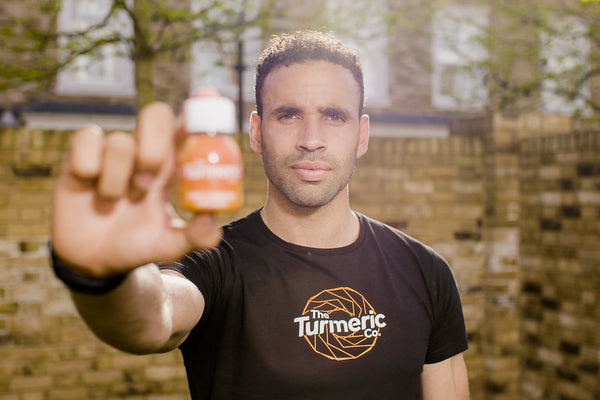
The Hal Robson-Kanu Guide To Fitness & Nutrition
Gain exclusive insight into habits that will make every day a healthy and fulfilling one.