


The signs of chronic inflammation are frustratingly non-specific, which is exactly why the internet can sell you almost anything as a cure for them.
Chronic inflammation is a low-grade immune response that persists rather than resolving. The commonly cited signs, persistent tiredness, aching joints, poor sleep, and low mood, overlap with dozens of other explanations, which is why they can't be self-diagnosed. Blood markers such as CRP exist, but interpreting them is a job for your GP.
Key takeaways
- There's no symptom checklist that confirms chronic inflammation, and anyone presenting one as diagnostic is overreaching.
- The usual signs are real but shared with thyroid problems, anaemia, depression, poor sleep, and plenty else.
- Blood tests like CRP measure inflammation, but a result only means something in the context of your history.
- The things that genuinely help are unglamorous and well established: sleep, movement, food pattern, not smoking.
What is chronic inflammation?
Chronic inflammation is defined as an inflammatory response that persists at a low level over months or years, rather than flaring to deal with a problem and then resolving.
Acute inflammation is the useful kind. You sprain an ankle, the area swells and warms, repair happens, it settles. That process is doing exactly what it should.
The chronic version doesn't switch off. There's no obvious injury to point at, the response runs quietly in the background, and it's this state that researchers associate with a range of long-term health conditions.
Here's the honest bit: "chronic inflammation" is used far more loosely in wellness marketing than in medicine. It's a real biological phenomenon and it's also a convenient label for selling supplements to people who feel generally rubbish.
What are the commonly cited signs of chronic inflammation?
Persistent fatigue, aching joints and muscles, digestive discomfort, poor sleep, low mood, and frequent minor infections. Every one of those has many other explanations.
That's not a reason to ignore them. It's a reason to get them looked at properly rather than deciding for yourself what's causing them.
| Commonly cited sign | What else it very often is |
|---|---|
| Persistent tiredness | Poor sleep, low iron, thyroid problems, stress, depression |
| Aching joints or stiffness | Osteoarthritis, overuse, an inflammatory condition needing treatment |
| Digestive discomfort | IBS, food intolerance, diet pattern, stress |
| Low mood or brain fog | Sleep, mental health, thyroid, perimenopause |
| Catching every cold going | Sleep, stress, exposure, ordinary variation |
The pattern is obvious once it's laid out! Not one of those rows points to a single cause, and that's why a symptom list can suggest a conversation but never a conclusion.
If any of them is persistent, worsening, or new for you, that's a GP appointment. Particularly unexplained weight loss, fever, night sweats, or joint swelling, which need proper assessment rather than a dietary experiment.
Can you test for it?
Yes, up to a point, and the results need a clinician to interpret.
C-reactive protein is the common one. Your liver produces it when inflammation is present, and it's a routine blood test. The catch is that CRP rises for all sorts of reasons, including an infection you're getting over, so a single number in isolation says very little.
Direct-to-consumer inflammation panels have become popular. They tend to measure real things and then hand you a result with no clinical context, which is how people end up worried about a number that would not have concerned their GP at all.
If you're curious about your inflammatory status, the useful route is your GP, who can consider it alongside your symptoms and history rather than on its own.
What reduces chronic inflammation?
Sleep, regular movement, an overall food pattern with plenty of plants and oily fish, not smoking, and managing stress. It's a dull list that has more evidence behind it than anything you can buy.
Sleep is probably the most underrated. Persistently short or broken sleep is associated with higher inflammatory markers, and no supplement compensates for it.
Movement helps, and the NHS physical activity guidelines give a realistic target rather than an intimidating one. Regular moderate activity beats occasional heroics.
For food, the NHS Eatwell Guide covers the pattern, and the British Dietetic Association's omega-3 guidance suggests two portions of fish a week with one oily. Carrying excess weight around the middle is itself associated with higher inflammatory markers, so weight management belongs on the list where it's relevant.
Where turmeric fits, honestly
As a small supportive addition once the foundations are in place, with research behind it that's promising rather than conclusive.
Curcumin has been studied for its effect on inflammatory signalling, and trials measure that through markers like CRP. A clinical trial at Nottingham Trent University found lower CRP in professional footballers taking two shots a day, independent research we funded and had no hand in the findings of. Our guide to turmeric for inflammation explains the mechanism properly.
The thing to avoid is the reverse order: reaching for a supplement while sleeping five hours a night and hoping it balances out. It won't, and no honest brand should tell you otherwise.
The takeaway
If you feel persistently below par, the right first move is a GP appointment, not a supplement order. The signs attributed to chronic inflammation are shared with too many treatable things to guess at, and some of those things matter.
Once you know what you're dealing with, the foundations are where the real gains are: sleep you protect, movement you keep up, food you eat most days rather than occasionally.
Turmeric is a reasonable addition on top of that, and it's worth taking in a form your body can absorb rather than a jar you'll forget about. Raw Turmeric Original is a cold-crushed watermelon-based blend of raw turmeric root with magnesium and vitamin C, and our trade-secret BioMax Uptake Blend®, which includes black pepper. If it's frequent colds bothering you most, Raw Turmeric & Vitamin C & D3 is built around vitamin C and vitamin D, both of which contribute to the normal function of the immune system.
Frequently asked questions
What are the main signs of chronic inflammation?
The commonly cited ones are persistent fatigue, aching joints and muscles, digestive discomfort, disrupted sleep, low mood, and frequent minor infections. All of them have many other possible causes, so they point towards getting checked rather than towards a diagnosis. Persistent or worsening symptoms deserve a GP appointment.
Can I test for chronic inflammation at home?
Consumer tests measuring CRP and similar markers exist, but a number without clinical context is easy to misread. CRP rises for many reasons, including a recent infection. If you want to know your inflammatory status, ask your GP, who can interpret it alongside your symptoms and history.
How do I reduce chronic inflammation naturally?
Prioritise sleep, move regularly, eat a varied diet with plenty of plants and two portions of fish a week, don't smoke, and manage stress and weight where relevant. These have far more evidence than any supplement. Anything you add, turmeric included, works on top of that foundation rather than instead of it.
Is chronic inflammation the same as an autoimmune condition?
No. Autoimmune conditions such as rheumatoid arthritis involve the immune system attacking the body's own tissue, and they need medical diagnosis and treatment. Chronic low-grade inflammation is a broader, less specific state. If you have joint swelling, prolonged morning stiffness, or symptoms mirrored on both sides of the body, see your GP promptly.
Does turmeric help with chronic inflammation?
Curcumin has been studied for its effect on inflammatory signalling, with trials reporting reduced markers such as CRP in some groups. The evidence is encouraging and still developing, and the effects are moderate. Treat it as a supportive daily habit alongside sleep, movement and diet, not as a treatment for a diagnosed condition.
When should I see a doctor about these symptoms?
If symptoms are persistent, getting worse, or new and unexplained. Unexplained weight loss, fever, night sweats, swollen joints, or fatigue that stops you doing normal things all warrant prompt assessment. Getting a proper diagnosis first is what makes any decision about supplements sensible rather than a guess.

Raw Turmeric Original Shot Box
Our Original Turmeric Shot packs a real punch thanks to a whopping 35g of fresh raw turmeric root used to make each shot.
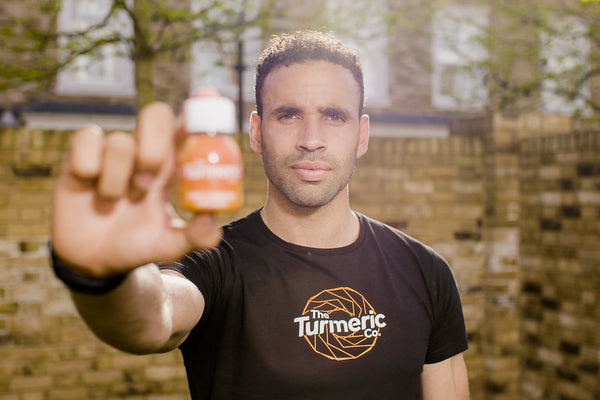
The Hal Robson-Kanu Guide To Fitness & Nutrition
Gain exclusive insight into habits that will make every day a healthy and fulfilling one.