


The NHS has launched a major campaign encouraging around nine million people in England to consider talking therapies.
This is amid growing concern that rising anxiety and depression are contributing to long-term sickness and economic inactivity.
On the surface, that statistic feels stark. But beneath it is something positive: mental health is finally being treated as essential health. The campaign is less about alarm and more about access — making it easier for people to seek support earlier rather than waiting until crisis point.
And that shift matters.
What’s behind the campaign?
NHS Talking Therapies already supports over a million people each year with anxiety disorders, depression, PTSD and related conditions. The new media push aims to reach those who may be struggling quietly but haven’t yet sought help.
Health leaders are particularly concerned about the link between untreated anxiety and the growing number of people out of work due to long-term sickness.
But beyond economic impact lies a broader truth: chronic stress is taking a toll on the body as well as the mind.
Anxiety, stress and the body
Anxiety is not simply “overthinking”. It is a physiological stress response.
When the body perceives threat (whether physical or psychological) it activates the hypothalamic–pituitary–adrenal (HPA) axis, releasing cortisol and other stress hormones.
In short bursts, this system protects us. Chronically activated, it can disrupt sleep, digestion, hormone balance and immune function.
This matters because inflammation is increasingly understood as a shared pathway in both physical and mental health conditions. Research has explored the link between inflammatory markers and depressive symptoms, reinforcing that mental health is deeply biological.
Therapy plays a powerful role in helping regulate thought patterns and emotional responses. But psychological support is only one part of the picture. Supporting the body’s stress systems through nutrition is another evidence-informed pillar.

The science behind nutrition and mental health
Nutritional psychiatry is a rapidly growing field examining how diet influences mood, cognition and stress resilience.
One of the most well-known studies, the SMILES trial, demonstrated that improving overall diet quality significantly reduced depressive symptoms compared to social support alone.
Participants followed a whole-food dietary pattern rich in vegetables, fruits, legumes, nuts and wholegrains — and saw measurable improvements.
Key mechanisms include:
1. Inflammation regulation
Plant-based foods rich in polyphenols (such as turmeric, berries and leafy greens) can help to modulate inflammatory pathways. Curcumin, the active compound in turmeric, has been studied for its potential anti-inflammatory and neuroprotective properties.
2. Gut–brain axis support
Approximately 90% of serotonin is produced in the gut. A diverse, fibre-rich diet supports a healthy microbiome, which in turn influences mood and stress response through neural and immune signalling pathways.
3. Cortisol balance and adaptogens
Adaptogenic herbs such as ashwagandha have been studied for their potential to reduce cortisol levels and improve perceived stress. Several randomised controlled trials suggest ashwagandha supplementation may support stress reduction and sleep quality when used appropriately.
4. Micronutrient sufficiency
Magnesium, B vitamins, zinc and vitamin D all play roles in nervous system regulation and neurotransmitter production. Suboptimal intake has been associated with increased anxiety and low mood in observational studies.
Importantly, this is not about replacing therapy with food. It is about recognising that mental resilience is supported by physiological resilience.
Therapy plus nourishment: an integrated approach
The NHS campaign encourages people to seek talking therapies — and rightly so. Cognitive behavioural therapy and other modalities have strong evidence bases for reducing anxiety and depression.
But if chronic stress affects immune signalling, inflammation and hormone balance, then supporting those systems nutritionally becomes part of the recovery conversation.
A whole-food, plant-based dietary pattern provides antioxidants, fibre and bioactive compounds that help regulate oxidative stress and inflammatory load. Unlike ultra-processed supplements in tablet form, fresh, raw ingredients retain complex plant matrices that may enhance absorption and synergy..
It is not a substitute for professional care. But it can sit alongside therapy, movement, sleep hygiene and social connection as part of a coherent wellbeing strategy.
A cultural shift towards proactive mental health
Perhaps the most encouraging aspect of the NHS initiative is the normalisation of early support. Seeking therapy is increasingly viewed not as a last resort, but as preventative care.
The same mindset applies to nutrition. We would not wait for bone density to collapse before considering calcium intake. Likewise, supporting the nervous system and immune health proactively makes biological sense.
Mental health does not exist in isolation from physical health. They share pathways — inflammatory, hormonal, neurological.

If you have been feeling persistently anxious, overwhelmed or low, exploring NHS Talking Therapies is a strong first step. And alongside that, consider what daily nourishment looks like. Is it fibre-rich? Polyphenol-dense? Supportive of gut diversity and cortisol balance?
Therapy may help reshape thoughts. Nutrition can help regulate the physiology beneath them.
Together, they create the conditions where resilience is not forced — but rebuilt.

Raw Turmeric Vitamin C & D3 Shot Box
Our Raw Turmeric Vitamin C & D3 drink is a powerful tropical-flavoured shot to help support immunity and deliver an energy boost when you most need it
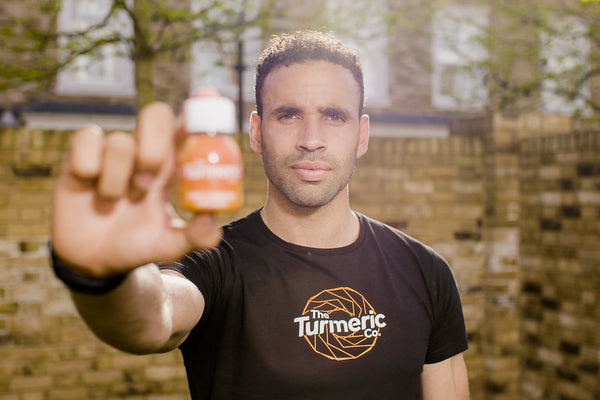
The Hal Robson-Kanu Guide To Fitness & Nutrition
Gain exclusive insight into habits that will make every day a healthy and fulfilling one.