


Intermittent fasting has been hailed as everything from a weight-loss hack to a longevity secret.
You’ve probably seen the headlines: skip breakfast, compress your eating window, fast two days a week — and watch the kilos melt away while your metabolism resets.
But a major new review has poured some cold water on the hype.
After analysing 22 randomised clinical trials involving nearly 2,000 adults across Europe, North America, China, Australia and South America, researchers found that intermittent fasting is no more effective for weight loss than conventional dietary advice.
On average, people lost around 3% of their body weight - below the 5% threshold doctors typically consider clinically meaningful.
So what does this mean for your metabolism, your long-term health, and crucially, your immunity? Let’s unpack it.
What the evidence actually shows
The review, led by Dr Luis Garegnani of the Cochrane Associate Centre in Argentina, examined various fasting approaches:
-
The 5:2 diet (two fasting days per week)
-
Alternate-day fasting
-
Time-restricted eating (such as eating within an 8-hour window)
Across the board, weight loss outcomes were similar to those achieved with traditional calorie-controlled diets. Intermittent fasting was “not clearly better, but not worse either”.
Importantly:
-
Most studies were short-term (12 months or less)
-
There was no strong evidence of improved quality of life
-
None of the studies asked participants how satisfied they were with fasting
-
Long-term sustainability remains unclear
For a dietary strategy that has exploded in popularity, that’s a surprisingly modest outcome.

But what about inflammation and immune health?
This is where things get interesting.
Animal studies suggest fasting may:
-
Improve insulin sensitivity
-
Reduce inflammation
-
Lower oxidative stress
-
Trigger autophagy (the body’s cellular recycling process)
Autophagy, in particular, has been linked to healthy ageing and immune resilience.
However, translating animal research to humans is complex. In humans, evidence remains inconsistent — especially in short-term studies.
And here’s a key point: short fasting windows may not be long enough to trigger the biological shifts people assume are happening.
In one study led by Professor Maik Pietzner at the Berlin Institute of Health, participants fasted for seven days. Widespread changes in blood proteins didn’t occur until after three days. Most popular fasting protocols don’t approach that duration.
So while fasting may influence immune pathways in theory, the real-world impact — especially in everyday 16:8 or 5:2 patterns — appears limited.
The hidden piece: immunity isn’t just about calories
Weight loss alone does not automatically equal better immune health.
In fact, immunity depends on:
-
Micronutrient sufficiency (Vitamin C, D3, zinc, magnesium)
-
Antioxidant intake
-
Gut microbiome diversity
-
Stable blood sugar
-
Reduced chronic inflammation
If fasting simply reduces calories without improving nutrient density, immune support may not improve — and in some cases, it may even decline.
This is particularly relevant if fasting leads to:
-
Lower energy levels
-
Reduced physical activity
-
Skipped meals without strategic nourishment
-
Overeating ultra-processed foods in eating windows
Your immune system does not thrive on restriction alone. It thrives on nourishment.
Circadian rhythms: timing may matter more than restriction
Dr Zhila Semnani-Azad from the National University of Singapore points out that timing could influence outcomes. Our circadian rhythm regulates:
-
Hormone release
-
Metabolism
-
Immune function
-
Inflammatory signalling
There is growing research suggesting that aligning eating patterns with daylight hours may support metabolic health. But again — this doesn’t necessarily mean aggressive fasting is required.
Sometimes, simply avoiding late-night eating and supporting blood sugar stability can achieve similar effects without extreme restriction.
Why inflammation matters for weight and immunity
Chronic low-grade inflammation is one of the biggest disruptors of both metabolic health and immune resilience.
It’s associated with:
-
Weight gain
-
Fatigue
-
Reduced immune defence
-
Higher susceptibility to illness
The question is not just “How do I lose weight?” but:
How do I reduce inflammation and strengthen immunity at the same time?
That typically involves:
-
Antioxidant-rich whole plant foods
-
Natural anti-inflammatory compounds (curcumin and gingerols have been linked to this)
-
Vitamin C and D3 for immune regulation
-
Magnesium for energy metabolism and stress resilience
So should you fast?
If intermittent fasting feels natural, improves your energy, and fits your lifestyle — there’s no strong evidence to say you must stop.
But the new data makes one thing clear:
Fasting is not superior to balanced, whole-food nutrition for weight loss or overall health.
For those focused on long-term wellbeing rather than short-term weight fluctuations, consider shifting the focus from restriction to nourishment:
-
Prioritise antioxidant-dense plant foods
-
Support gut health
-
Include natural anti-inflammatory ingredients
-
Maintain stable blood sugar
-
Reduce ultra-processed foods
-
Ensure adequate vitamin C, D3, magnesium and zinc intake
When supplementation is needed, we believe in raw, fresh, food-based delivery rather than ultra-processed tablets or synthetic pills — because bioavailability and absorption matter.

Intermittent fasting is not a miracle solution.
It may help some people manage calorie intake. It may align with certain lifestyles. But it is not clearly better than conventional dietary approaches, and it is far from a guaranteed pathway to better immunity or longevity.
Because sometimes, the most powerful strategy isn’t doing less.
It’s nourishing better.
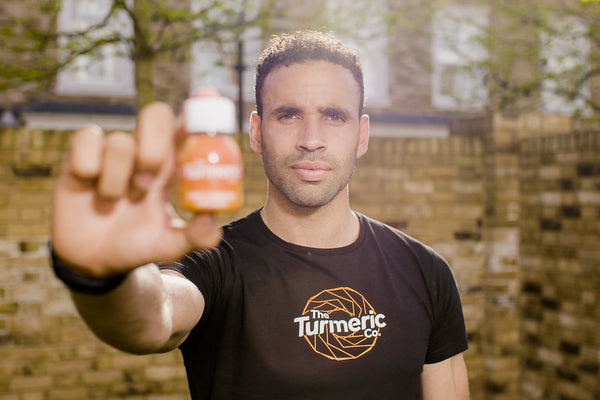
The Hal Robson-Kanu Guide To Fitness & Nutrition
Gain exclusive insight into habits that will make every day a healthy and fulfilling one.