


Blood sugar has quietly become one of the numbers people keep an eye on, from finger-prick tests and glucose monitors to the HbA1c result on a routine blood test, so it's natural to wonder whether a daily spice could nudge it.
Turmeric and blood sugar is one of the more consistent areas of curcumin research. A 2026 meta-analysis of 34 randomised trials in people with prediabetes or type 2 diabetes found turmeric or curcumin supplements lowered fasting glucose by about 0.56 mmol/L on average, though results varied widely from trial to trial.
Key takeaways
- Most of the research on turmeric and blood sugar is in people with prediabetes or type 2 diabetes, and most of it used curcumin capsules.
- Across those trials, fasting glucose and HbA1c came down modestly, with a lot of variation between studies.
- In people with normal blood sugar, the evidence is limited to two small single-meal studies, and they point different ways.
- Food, movement, and weight make the biggest difference to blood sugar, and the NHS offers support if yours is creeping up.
- If you take medicines that lower blood sugar, speak to your pharmacist or GP before adding turmeric.
What do the blood sugar numbers actually mean?
Two numbers do most of the work: fasting glucose and HbA1c.
Fasting glucose is the amount of sugar in your blood after a stretch without food, usually overnight, and in the UK it's given in mmol/L. HbA1c is defined as a measure of your average blood sugar over roughly the last three months, read from the sugar that has attached itself to your red blood cells. Diabetes UK explains that if you're at risk of type 2 diabetes, the target is an HbA1c below 42 mmol/mol, and that 48 mmol/mol or above is the level used to diagnose diabetes.
The space between those two is prediabetes. The NHS describes prediabetes as blood glucose that is higher than normal but not high enough for a diagnosis, which also means a higher risk of developing diabetes in future. It usually has no symptoms, so most people only find out from a blood test.
What does the research say about turmeric and blood sugar?
Modest, fairly consistent improvements, mostly in people whose blood sugar is already raised.
The 2026 meta-analysis is the largest recent picture. Alongside the fall in fasting glucose, HbA1c came down by 0.32 percentage points, which is about 3.5 mmol/mol in the units used on UK test results, and insulin resistance improved too. Doses of 1g a day or more did better than lower ones, and the authors noted how much the trials differed from each other.
An earlier meta-analysis of 59 trials in adults found the same direction with a smaller fall in fasting glucose, about 0.26 mmol/L, and the same 0.32-point fall in HbA1c.
The single most striking result is from prevention. In a nine-month Thai trial of 240 people with prediabetes, 16.4% of those taking a placebo went on to develop type 2 diabetes, compared with none of those taking a curcumin extract. It's one trial of a concentrated extract, so it needs confirming elsewhere, but it's an encouraging finding.
| What was studied | Who took part | What the research found |
|---|---|---|
| 34 randomised trials, 2026 | People with prediabetes or type 2 diabetes | Fasting glucose about 0.56 mmol/L lower, HbA1c 0.32 points lower |
| 59 randomised trials, 2023 | Adults | Fasting glucose about 0.26 mmol/L lower |
| A nine-month trial, 240 people | People with prediabetes | None on curcumin developed type 2 diabetes, against 16.4% on placebo |
| A single-meal trial, 16 adults | People with normal blood sugar | A 36% smaller rise in blood glucose after the meal |
Does turmeric lower blood sugar in healthy people?
The evidence is still developing, and the two studies that exist point different ways.
A small Australian trial at the University of Newcastle gave 16 healthy adults a single 180mg curcumin tablet before a standard meal, and the rise in their blood glucose afterwards was 36% smaller than with a placebo. A Swedish trial in Malmö gave 14 healthy adults 6g of turmeric in capsules alongside a glucose drink and found no change in blood glucose, although insulin was higher.
Both were tiny, and both tested a single dose rather than a habit, so they're early signals rather than answers. It's also worth knowing that almost all of this research tested capsule supplements rather than turmeric in food or drink, so none of it measured a turmeric shot.
What makes the biggest difference to blood sugar?
The everyday basics, and the NHS has a programme built around them.
The NHS advice on preventing type 2 diabetes is to talk to your care team about eating more healthily, exercising, and other lifestyle changes. If a blood test shows prediabetes, you may be offered the NHS Diabetes Prevention Programme, which supports exactly those changes.
Drinks count as well. The NHS eight tips for healthy eating point out that the sugars naturally found in unsweetened fruit juices and smoothies are free sugars, and suggest no more than one 150ml glass a day. Fruit-based shots, ours included, contain natural fruit sugars, and a 60ml shot sits well inside that limit.
Who should check before adding turmeric?
Anyone taking medicines that lower blood sugar.
Because curcumin may lower blood glucose, adding it on top of diabetes treatment could push your levels lower than intended, and that risk of hypoglycaemia is the reason to speak to your pharmacist or GP first. Our guide to turmeric and diabetes medication goes through the question in detail.
Most of what's known about turmeric and medicines relates to concentrated curcumin supplements, which carry far more curcuminoid than a juiced whole-food shot. The direct evidence on drinks is limited, though, so the safe course is still to ask.
Where does turmeric fit in a blood sugar routine?
As one easy part of a healthy routine, never as a replacement for treatment.
Raw Turmeric Original carries the most turmeric of any blend we make, raw turmeric root at 30%, cold-crushed with whole watermelon, pineapple, and lemon, with magnesium and vitamin C added. It includes our trade-secret BioMax Uptake Blend®, which includes black pepper, at a 0.1% inclusion.
It's also the blend independent researchers at Nottingham Trent University used in the first clinical trial of our shots, where professional footballers drinking two a day had lower inflammation markers and less soreness after matches. We're clearly not a neutral party, and that trial looked at recovery rather than blood sugar.
The takeaway
Turmeric and blood sugar research is encouraging: across dozens of trials, mostly in people with prediabetes or type 2 diabetes, curcumin supplements have brought fasting glucose and HbA1c down modestly. In people with normal blood sugar, the evidence is still developing. Food, movement, and the NHS support on offer remain the foundations, and anyone on diabetes medicines should check with a pharmacist or GP first.
For turmeric as part of that routine, Raw Turmeric Original is a single 60ml shot with breakfast, and an easy habit to keep.
Frequently asked questions
Does turmeric lower blood sugar?
In trials of people with prediabetes or type 2 diabetes, curcumin supplements lowered fasting glucose and HbA1c modestly on average. Evidence in people with normal blood sugar is limited to small studies with mixed results.
How much turmeric was used in the blood sugar studies?
Most trials used curcumin capsules, and in the 2026 meta-analysis, doses of 1g a day or more did better than smaller ones. Our guide to the curcumin dose in studies explains why those numbers are hard to compare.
Can turmeric replace diabetes medication?
No. Turmeric isn't a treatment for diabetes, and you shouldn't change or stop any medicine without your doctor. If you take diabetes medicines, speak to your pharmacist or GP before adding turmeric.
Can turmeric help with prediabetes?
The research in prediabetes is encouraging, including one nine-month trial where nobody taking curcumin developed type 2 diabetes. The NHS Diabetes Prevention Programme, with its focus on food and activity, is the place to start.
When is the best time to take turmeric for blood sugar?
The single-meal study that found a smaller glucose rise gave curcumin just before eating. For a daily habit, having turmeric with breakfast is simple to remember and gentle on the stomach.
Do turmeric shots contain sugar?
Fruit-based shots contain natural sugars from the fruit juice, which the NHS counts as free sugars. A 60ml shot is well within the NHS suggestion of no more than 150ml of juice a day.

Raw Turmeric Original Shot Box
Our Original Turmeric Shot packs a real punch thanks to a whopping 35g of fresh raw turmeric root used to make each shot.
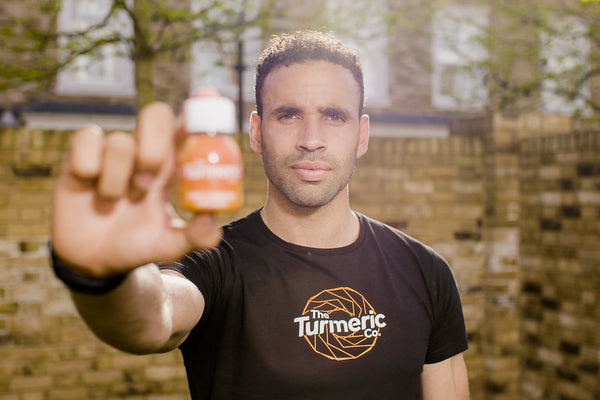
The Hal Robson-Kanu Guide To Fitness & Nutrition
Gain exclusive insight into habits that will make every day a healthy and fulfilling one.