


Turmeric for immunity is one of the most repeated claims in the wellness aisle, and one of the least carefully explained. Here's what the science supports, and what it doesn't.
Curcumin, the main active compound in turmeric root, is studied for the way it dampens inflammatory signalling rather than for making your immune system stronger. Curcumin makes up roughly 3% of the root, and it's poorly absorbed on its own, which is why the form you take it in decides whether any of this applies to you.
Key takeaways
- Your immune system isn't a dial you turn up. It's a network that works best when it's well fed, well rested, and not fighting you.
- Curcumin's research is about calming inflammatory signalling, not about producing more immune cells.
- The basics beat every supplement here: sleep, a varied diet, movement, vitamin D through the winter, and the vaccinations you're offered.
- Our own research with professional footballers found fewer days of illness on a daily immunity shot, and we cover the caveats below.

What does turmeric for immunity actually mean?
It means using turmeric as one small, daily input into a system that's already running, not as a switch that turns your defences up.
The immune system is defined as the network of cells, tissues, and organs, from your skin and gut lining through to your bone marrow and lymph nodes, that identifies and clears threats while leaving your own tissue alone. Nothing you eat commands it. Food and habits change the conditions it works in.
That distinction matters commercially as well as scientifically, because "boost your immune system" is the phrase this category sells on, and an overactive immune response is a problem in its own right rather than a goal.
Where turmeric enters the picture is inflammation. Inflammation is part of a normal immune response, and it's also what makes you feel wretched for three days when you have a cold. Curcumin is studied for its effect on the signalling molecules involved in that process.
What does the research on curcumin and immunity show?
Consistent effects on inflammatory markers in trials, and much thinner evidence on whether that translates into getting ill less often.
The strongest and most replicated finding is that curcumin lowers circulating inflammatory markers such as C-reactive protein. A 2023 dose-response meta-analysis pooling 66 randomised controlled trials found turmeric and curcumin supplementation significantly reduced C-reactive protein, tumour necrosis factor alpha, and interleukin 6. That's the same mechanism behind what the joint and recovery trials found, and it's why turmeric shows up in immunity conversations at all.
What's much less settled is infection. There's laboratory and animal work on curcumin and immune cell behaviour, and there are human trials in inflammatory conditions, but there is no large body of trials showing that healthy adults taking curcumin catch fewer colds.
| The claim you'll see | What the evidence actually supports |
|---|---|
| Turmeric boosts your immune system | No. It's studied for calming inflammatory signalling, not amplifying immunity |
| Curcumin lowers inflammatory markers | Yes, this is the best replicated finding in human trials |
| Turmeric stops you catching colds | Not established in healthy adults |
| A spoon of powder in hot water does the job | No. Absorption is the whole problem, and powder is for flavour |
| It works alongside sleep, diet, and vaccination | Yes, that's the honest framing |
The European Food Safety Authority set an acceptable daily intake for curcumin of 3mg per kilogram of body weight per day, which is a useful scale reference when you're comparing what a product actually delivers.
What our own research found
We funded independent researchers to run a study in 23 professional footballers taking one Raw Turmeric & Vitamin C & D3 shot a day through a competitive season.
The players on the shots recorded far fewer days of upper respiratory illness than the control group, 3.9 versus 10.6 per 1000 player days, and the difference was statistically strong. They also reported less gut discomfort, alongside a lower blood marker of stress to the gut lining.
We're clearly not a neutral party, so read it with that in mind. It's also a small study in young professional athletes training hard, which is a long way from a desk job in February. What it does show is that the blend was tested properly by people who weren't us, and that the result pointed the same way as the mechanism.
What protects you more than any supplement
Sleep, food, movement, vitamin D through the darker months, and the vaccinations you're eligible for. None of it is new, and all of it outperforms anything in a bottle.
The British Nutrition Foundation's guide to vitamins and minerals makes the useful point that several nutrients feed into normal immune function, so a varied diet does more than any single one of them in isolation. Vitamin C helps the immune system work normally. So does vitamin A. So do zinc, copper, selenium, and iron.
Vitamin D is the exception worth acting on, because you can't get enough from a British winter. The NHS advises everyone to consider a daily 10 microgram supplement through autumn and winter, which is the single most evidence-backed supplement decision most UK adults make.
If you're offered the NHS flu vaccine, take it. It does more for your winter than any shelf in a health food shop.
We've written more on the nutrients themselves in vitamin C and D3 for immune support, and on what to do when something does get through in turmeric for colds and flu.
Where a daily turmeric habit fits
After the basics, as the extra that's easy to keep up. And the form decides everything, because curcumin that isn't absorbed does nothing at all.
Curcumin needs help getting into the bloodstream. Black pepper is the classic partner, and a little fat helps too, which is why the format you choose matters more than the milligrams on the label. Powder in a hot drink is a lovely ritual and a flavouring, not a daily dose.
Timing is less interesting than people hope. What decides whether this does anything is how consistent you are eight weeks from now, so attach it to something you already do. Most people find the morning works, straight after the kettle goes on.
Raw Turmeric & Vitamin C & D3 is the one built for this job, and it's the blend those footballers took: a cold-crushed, whole watermelon-based shot with raw turmeric root, ginger, pineapple, lemon, and pomegranate, carrying our Lipoturm© blend of vitamin C, vitamin D3, and vitamin E, finished with our trade-secret BioMax Uptake Blend®, which includes black pepper and cinnamon.
The takeaway
Immunity is the area where this industry makes its biggest promises and has its thinnest evidence, so it's worth being straight about it. Turmeric doesn't armour you against winter. Sleep, food, and your vaccinations do the heavy lifting.
What turmeric offers is a well-studied effect on the inflammatory side of the picture, plus our own trial suggesting the immunity blend helped a group of athletes stay well. That's a reasonable thing to add on top of the basics, and a poor thing to rely on instead of them.
A shot makes it a habit you'll actually keep. Start with Raw Turmeric & Vitamin C & D3, one a day, and let the boring stuff carry the rest.
If you're getting infections unusually often, or one keeps hanging around, that's a conversation for your GP rather than a supplement decision.
Frequently asked questions
Does turmeric boost your immune system?
Not in the way the phrase suggests. Curcumin is studied for calming inflammatory signalling rather than for producing more immune cells, and there's no good evidence that healthy adults taking it catch fewer colds. It's a sensible addition alongside sleep, a varied diet, and the vaccinations you're offered, not a replacement for them.
How much turmeric should I take for immunity?
Trials generally use concentrated curcumin daily rather than culinary amounts, which is why absorption matters more than the raw weight of root. EFSA's acceptable daily intake for curcumin is 3mg per kilogram of body weight per day as a scale reference. A daily shot with black pepper alongside it is a more realistic way to get there than a spoon of powder.
Is turmeric or vitamin C better for immunity?
They do different jobs, so it isn't really a contest. Vitamin C contributes to normal immune function and you need it regularly because your body doesn't store it. Turmeric's research sits on the inflammatory side. Our immunity shot carries both, which is why the blend was built that way.
Can I take turmeric every day through winter?
Most people can, and daily is how the trials dose it. Turmeric is generally well tolerated, with minor digestive side effects the most common complaint. If you take blood thinners, have gallbladder problems, or are pregnant, check with your GP or pharmacist first.
How long does turmeric take to work?
For the inflammatory markers that trials measure, changes typically show over weeks rather than days. Treat it as a habit with a two month horizon rather than something you take when you feel a cold coming on.
What actually reduces how often I get ill?
Sleeping properly, eating a varied diet, keeping active, washing your hands, taking a vitamin D supplement through autumn and winter, and having the vaccinations you're eligible for. That list is unglamorous and it's where the real evidence sits.
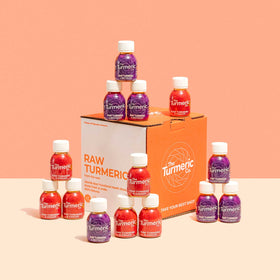
Immunity Boosting Shot Box
A powerful combination of our Turmeric Beetroot and Turmeric Ginger shots.
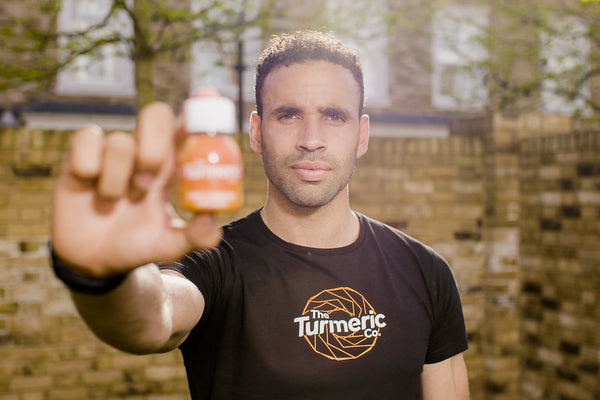
The Hal Robson-Kanu Guide To Fitness & Nutrition
Gain exclusive insight into habits that will make every day a healthy and fulfilling one.