


Both come from the same knobbly root, yet they do quite different jobs in your kitchen and your body.
Fresh vs powdered turmeric comes down to what you want from it. Powder is dried, ground root: cheap, long-lasting, and brilliant for cooking, but a teaspoon in a latte is mostly flavour. Turmeric is only around 2 to 5 per cent curcumin, and that curcumin absorbs poorly, so neither form is a reliable daily dose without help.
Key takeaways
- Powder wins in the kitchen: it's cheap, it keeps for months, and heat plus a little fat helps a bit.
- Fresh root holds the aromatic, volatile compounds that drying drives off, but it's seasonal, fiddly, and stains everything.
- Curcumin absorbs poorly whichever form you use, so a pinch in food isn't a meaningful daily dose.
- A cold pressed shot is the practical way to get raw root into a routine you'll actually keep.
What's the real difference between fresh vs powdered turmeric?
The difference between fresh vs powdered turmeric comes down to water, heat, and time. Turmeric is defined as the rhizome, or underground stem, of the plant Curcuma longa, used either as a fresh root or dried and milled into powder.
Fresh root is the raw thing: firm, bright orange inside, faintly peppery and citrusy. Powder is that same root cooked down, dried, and ground, which concentrates it by weight but changes its character.
Drying is efficient, and it's why powder sits in almost every spice rack. It also drives off some of the aromatic oils that give fresh root its lift. What you gain in shelf life, you lose a little of in freshness.
Curcumin, the pigment most of the research focuses on, survives drying reasonably well. Both forms are still best thought of as a culinary spice rather than a medicine, which is the honest frame for anything sitting in your kitchen.
Does turmeric powder actually do anything, or is it just flavour?
Powder does plenty in a pan, and almost nothing as a daily supplement. That's the split worth being clear about.
In cooking, it earns its place. Curcumin is fat-soluble, so frying your spices in a little oil or ghee helps carry it, and gentle heat in a curry can nudge absorption along. It's colour, warmth, and depth, and it's very good at all three.
The problem is dose. To get the amounts studied in trials, you'd be eating far more powder than any recipe calls for, and most of it would pass straight through you anyway.
Curcumin on its own is poorly absorbed. A 1998 study by Shoba and colleagues found that pairing it with piperine, the active compound in black pepper, markedly increased how much reached the bloodstream. A pinch of powder in a golden latte has neither the quantity nor the absorption support to count. A 2023 review in Phytotherapy Research has since drawn together the preclinical and clinical work on that pairing, and a 2022 meta-analysis of ten randomised controlled trials found curcumin supplementation eased muscle soreness and markers of muscle damage after hard exercise (Beba and colleagues, 2022). Neither result came from a spice jar.
So keep powder for what it's genuinely great at. It flavours your food, not your recovery!
What fresh root keeps that powder loses
Fresh root holds on to the volatile aromatic compounds that partly evaporate during drying, which is why it tastes livelier. That's its real edge over powder.
Grate it into a dressing, a stir-fry, or a juice and you get a brighter, more citrusy note than powder gives. Cooks who've made the switch rarely go back for flavour.
The catches are practical. Fresh turmeric is seasonal and not always on the shelf, it's fiddly to peel and grate, and it stains fingers, boards, and worktops a stubborn yellow. A little goes a long way, and a lot goes everywhere.
It also doesn't solve the absorption problem. Fresh or dried, curcumin still needs help getting in, so grating raw root into your food is lovely, but it isn't a reliable dose either.
How do you store fresh vs powdered turmeric?
Store powder cool, dry, and sealed, and store fresh root cold and used quickly. Getting this right is the difference between a spice that works and one that's quietly gone flat.
Ground turmeric keeps for months to a couple of years in an airtight jar away from heat and light, though its aroma fades over time. Keep it dry and sealed, and don't expect it to last forever.
Fresh root behaves like fresh ginger. It'll sit in the fridge for two to three weeks wrapped loosely, or you can peel, chop, and freeze it for a few months, grating straight from frozen. The Food Standards Agency advises keeping your fridge at 5°C or below, which is the difference between two good weeks and a soft, tired root.
Here's how the three forms line up.
| Fresh raw root | Turmeric powder | Cold pressed shot | |
|---|---|---|---|
| Dose consistency | Variable, hard to measure | Low as a supplement | Consistent, measured per shot |
| Absorption support | None unless you add pepper and fat | None unless you add pepper and fat | A measured black pepper blend, built in |
| Convenience | Fiddly, stains, seasonal | Very easy for cooking | Grab and go |
| Best use | Fresh flavour in cooking and juices | Curries, colour, everyday flavour | A daily habit you'll actually keep |
What happens in a shot made from powder versus raw root?
A shot pressed from raw root keeps more of the fresh character, while a shot built from powder is closer to reconstituted flavouring. The wording on the label usually tells you which you're holding.
Cold crushing takes fresh root and squeezes out the juice without cooking it, so the raw compounds stay largely intact. That's the practical version of eating fresh root, without the grating and the stained worktop.
A shot made from powder and water is really a rehydrated spice drink. It can taste fine, but it's built from the dried, flavour-first form, not pressed from the raw root.
To spot a from-concentrate shot, read the ingredients. Terms like "from concentrate", "turmeric powder", or "turmeric extract" high up the list point to a reconstituted product. "Cold pressed" with the root itself named suggests the fresher route.
Worth being straight about our own shots too: they're watermelon-based blends with cold pressed turmeric, not concentrated root juice. Raw Turmeric Original presses raw turmeric into a fresh fruit base, then adds the BioMax Uptake Blend®, a trade-secret black pepper blend, so the curcumin has support getting in, along with magnesium and vitamin C. That measured pepper is the bit a spoon of powder can't replicate.
If you want ginger's warmth alongside it, Raw Turmeric & Ginger does the same job with a mobility lean. Either way, the point is a measured, absorption-supported serving you can take without a chopping board. If capsules are also in the running, we've compared turmeric shots vs capsules vs powder in full.
Is any of this a health risk?
For most people, turmeric as a food or a shot is well tolerated, with only minor effects like a mild upset stomach at higher amounts. As a scale reference, EFSA has set an acceptable daily intake for curcumin of 3mg per kg of body weight, which normal culinary use sits comfortably within.
If you take blood thinners, have gallstones, or are pregnant, or you're simply unsure how turmeric fits your own health, ask your GP before adding a concentrated form to your routine. A short conversation beats guessing.
The takeaway
Powder belongs in the kitchen, and it's genuinely good there: cheap, long-lasting, and the backbone of a proper curry. Fresh root gives you brighter flavour when you can be bothered with the peeling and the stains.
But if what you actually want is turmeric working for you day after day, neither loose form makes that easy. The dose is uncertain and the absorption is poor.
A cold pressed shot solves both in one go. Raw Turmeric Original gives you raw root with a measured black pepper blend to support uptake, in a serving you'll remember to take. Keep the powder for your cooking, and let a daily shot carry the habit. If you're still weighing it up, our take on whether turmeric shots are worth it and the wider turmeric shots guide go deeper.
Frequently asked questions
Is fresh turmeric better than powder?
For flavour, fresh root is brighter because it keeps the aromatic oils that drying reduces. For everyday cooking and shelf life, powder is more practical. Neither is a reliable daily dose on its own, because curcumin absorbs poorly without black pepper and a little fat to help it along.
Can I get enough turmeric from cooking with powder?
Not really. The amounts used in cooking are about flavour, and the curcumin in them is poorly absorbed and present in small quantities. Powder is for taste, not for a meaningful daily dose. A shot formulated with absorption support is a more dependable route if that's your goal.
Does heating turmeric destroy its benefits?
Gentle cooking is fine, and pairing turmeric with a little oil and black pepper can actually help absorption. Curcumin is reasonably heat-stable, though prolonged high heat may reduce some of it. Fresh root also loses a little of its volatile aroma when cooked, which is why raw uses taste livelier.
How do I store fresh turmeric so it lasts?
Keep it in the fridge wrapped loosely, where it stays good for two to three weeks like fresh ginger. For longer, peel and freeze it and grate straight from frozen. Ground powder keeps for months in an airtight jar away from heat and light, though the aroma fades over time.
How can I tell if a turmeric shot is made from concentrate?
Read the ingredients list. Words like "from concentrate", "turmeric powder", or "turmeric extract" near the top suggest a reconstituted product. A cold pressed shot names the pressed root and keeps more of the raw compounds. Bear in mind most shots, including ours, are juice blends rather than neat root juice.
Is turmeric safe to take every day?
For most people, turmeric in food or a daily shot is well tolerated, with only minor effects like a mild stomach upset at higher amounts. If you take blood thinners, have gallstones, are pregnant, or are unsure how it suits you, check with your GP before making it a habit.

Raw Turmeric Original Shot Box
Our Original Turmeric Shot packs a real punch thanks to a whopping 35g of fresh raw turmeric root used to make each shot.
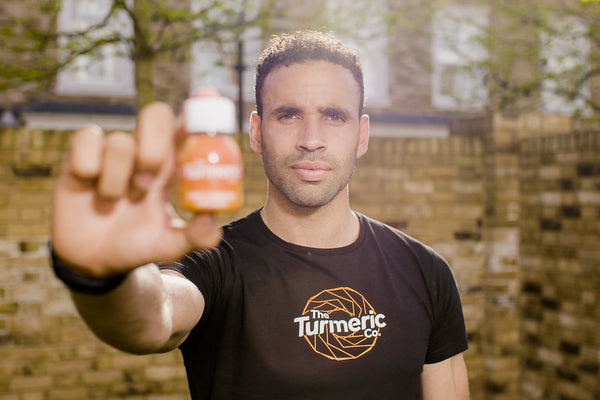
The Hal Robson-Kanu Guide To Fitness & Nutrition
Gain exclusive insight into habits that will make every day a healthy and fulfilling one.