


Ashwagandha for stress and sleep has gone from an obscure Ayurvedic root to the most talked about supplement in the country, and the research is more interesting than either the hype or the eye-rolling suggests.
Pooled randomised trials point to better sleep quality and lower self-reported anxiety. A meta-analysis of five randomised controlled trials in PLoS One found ashwagandha improved sleep, with the clearest effects in people diagnosed with insomnia, at 600mg a day or more taken for eight weeks or longer.
Key takeaways
- The sleep and anxiety trials are small, mostly short, and mostly positive.
- Effects show up at 600mg a day and over, taken for at least eight weeks. This is not a same-night sedative.
- It's a herbal supplement, not a food, so the safety questions are real ones.
- Anyone pregnant, breastfeeding, on thyroid or sedative medication, or with liver problems should speak to a GP or pharmacist first.
What is ashwagandha, and why is it used for stress?
It's a root used in Ayurvedic medicine for centuries, classed as an adaptogen, and studied in the last decade for its effect on stress hormones.
Ashwagandha is defined as the root of Withania somnifera, a shrub native to India and parts of Africa and the Middle East, taken as a dried extract rather than as a fresh ingredient. The extracts used in trials are made to a set specification, and KSM-66 is the one that appears most often in the published research.
The mechanism studied is its effect on the body's stress response, and in particular on cortisol. Several trials have measured morning cortisol alongside questionnaire scores, and reported reductions in both. That's a plausible route rather than a proven chain of cause and effect, and it's the reason the research has focused on stress and sleep rather than on anything else.
Stress itself is worth naming honestly. The NHS guidance on stress is clear that identifying the cause, and changing what can be changed, does more than anything you can swallow. A supplement sits alongside that, not instead of it.
Does ashwagandha for stress and sleep actually work?
The pooled evidence says yes, modestly, for sleep quality and self-reported anxiety, with the usual caveats about small trials.
On sleep, the PLoS One meta-analysis above pooled five randomised trials covering 400 participants and found a significant improvement in overall sleep quality, along with better anxiety scores and better mental alertness on waking. The benefit was larger in participants diagnosed with insomnia, at doses of 600mg a day or more, and in studies running eight weeks or longer. No serious side effects were reported. Quality of life, measured separately, didn't shift.
On anxiety, a systematic review and meta-analysis in Human Psychopharmacology covering ashwagandha for anxiety and insomnia pooled five trials in 254 people and found significantly lower anxiety scores, along with improvements in how long participants took to fall asleep, how long they slept, and their overall sleep quality score.
A dose-response meta-analysis in Complementary Therapies in Medicine covering 22 randomised trials is the largest pooling to date. It found significant improvements in stress, anxiety, and depression scores, and a clear association between the dose given and the effect on stress, which is the evidence behind the amounts below.
| Ashwagandha claim | What the pooled trials support |
|---|---|
| Improves sleep quality | Yes, modestly. Clearest in people with insomnia, over eight weeks or more |
| Reduces self-reported stress and anxiety | Yes, modestly, across several small randomised trials |
| Lowers morning cortisol | Measured and reduced in several trials, alongside the questionnaire scores |
| Works the first night you take it | No. Every positive trial ran for weeks |
| Treats a diagnosed anxiety disorder or insomnia | No. That's a conversation with your GP |
If sleep is the thing that's actually broken, the NHS guidance on insomnia and its advice on sleep habits is the first stop, and cognitive behavioural therapy for insomnia has the strongest evidence of anything available. Ashwagandha belongs alongside that work, as the part you can start tonight while you sort the rest out.
How much ashwagandha, and for how long?
Six hundred milligrams a day is the level most positive trials used, and eight weeks is the shortest sensible test.
Published trials cluster between 250mg and 600mg of a standardised root extract daily, usually split into two doses, and the clearer results sit at the upper end. The dose-response analysis above points the same way: more of the effect on stress showed up as the dose rose.
The timeframe matters more than people expect. Nothing here works like a sleeping tablet. The trials that found something gave it every day for two to three months and measured at the end, which is a useful way to set your own expectations.
Timing is flexible. Some trials dosed morning and evening, some evening only, and none of them established that one beats the other. Take it when you'll remember to take it.
Who should avoid ashwagandha?
More people than the marketing suggests, and this is a herbal supplement rather than a food, so the question is a fair one.
Do not take it if you're pregnant or trying to become pregnant. Traditional use includes effects on the uterus, and this is not a risk worth running.
Speak to your GP or pharmacist first if you're breastfeeding, take thyroid medication, take sedatives or medication for anxiety or sleep, have an autoimmune condition, or have any liver problem. There have been reports internationally of liver injury associated with ashwagandha supplements, which is rare but real, and worth knowing about rather than discovering later. Stop and seek medical advice if you develop yellowing of the skin or eyes, dark urine, or persistent stomach pain.
The NHS guidance on herbal medicines sets out the general rules for this class of product, including telling your doctor what you're taking before surgery or before starting new medication. Common milder effects are stomach upset and drowsiness.
Where a daily shot fits
As the low-effort version of a habit that only works if you keep it up for a couple of months.
Raw Turmeric & Ashwagandha is our mind and focus blend. It's a cold-crushed, whole watermelon-based shot with raw turmeric root at 8%, pineapple, lemon, and coconut nectar, carrying KSM-66 ashwagandha extract at 0.8%, plus magnesium, zinc, vitamin C, and vitamin B6, finished with our trade-secret BioMax Uptake Blend®, which includes black pepper, cinnamon, and thyme.
The nutrients alongside it aren't decoration. Magnesium contributes to normal psychological function and to a reduction of tiredness and fatigue, and vitamin B6 contributes to normal psychological function too. Those are established nutrient roles.
Most of our customers take their shot first thing, which is also the point in the day people are most likely to stick to something. If your sleep is the target, the habit needs to survive eight weeks, so pick the moment you'll actually keep.
The takeaway
Ashwagandha is one of the better researched herbal supplements available in the UK, and the honest summary is a modest, real improvement in sleep quality and self-reported stress, in small trials, over months rather than nights.
Treat it as one input. Daylight in the morning, a consistent bedtime, less caffeine after lunch, and dealing with whatever is actually causing the stress will always outrank it, and the evidence for those is not close.
If you want the supplement half without another jar on the shelf, Raw Turmeric & Ashwagandha puts KSM-66 alongside raw turmeric root and black pepper in one ten second habit. Give it a full eight weeks before you judge it.
If you're pregnant, on thyroid or sedative medication, or you have any liver condition, speak to your GP or pharmacist before you start.
Frequently asked questions
Does ashwagandha really help you sleep?
Pooled randomised trials say yes, modestly. A meta-analysis of five trials found improved overall sleep quality, better mental alertness on waking, and lower anxiety, with the largest effects in people diagnosed with insomnia. It isn't a sedative, and the trials that found benefit ran for eight weeks or more.
How long does ashwagandha take to work?
Plan on eight to twelve weeks. Almost every positive trial dosed daily for at least two months before measuring anything, and the reviews specifically note that longer studies show clearer results. If you're judging it after a week, you're judging it too early.
What's the right dose of ashwagandha?
Trials generally use 250mg to 600mg a day of a root extract, with the clearer benefits at 600mg and above, often split into two doses. Higher isn't automatically better, and there's no good evidence for very large amounts.
Can I take ashwagandha every day?
Trials have given it daily for up to three months and it was generally well tolerated, with mild stomach upset and drowsiness the usual complaints. Long-term safety beyond that hasn't been established, so it's worth reviewing with a pharmacist if you plan to take it for many months.
Who shouldn't take ashwagandha?
Avoid it in pregnancy or if you're trying to conceive. Check with your GP or pharmacist first if you're breastfeeding, on thyroid medication, taking sedatives or medication for anxiety or sleep, living with an autoimmune condition, or if you have any liver problem. Stop and get medical advice if you notice yellowing skin or eyes, dark urine, or ongoing stomach pain.
Can I take ashwagandha with turmeric?
Yes, and they're studied for different things, so they complement each other. Turmeric's research sits mainly on inflammation and recovery, ashwagandha's on stress and sleep. Our Raw Turmeric & Ashwagandha shot combines both, with black pepper to help the curcumin absorb.

Raw Turmeric & Ashwagandha Shot Box
This Turmeric Shot fused with Beetroot is a real powerhouse of a shot.
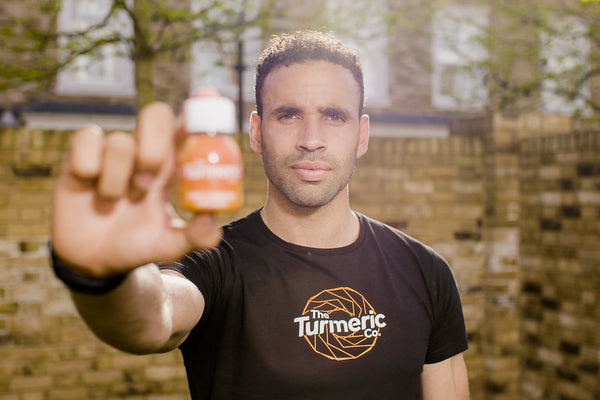
The Hal Robson-Kanu Guide To Fitness & Nutrition
Gain exclusive insight into habits that will make every day a healthy and fulfilling one.