


A wellness shot costs more than a vitamin tablet and far more than a jar of spice, so it has to earn its place in your fridge.
Are wellness shots worth it? They can be, if what's in the 60ml bottle matches what you want from it and you'll keep drinking one most days. They're a poor buy for topping up a single nutrient, so judge each one on its label, its evidence, and your own habits.
Key takeaways
- A shot makes sense when you want the ingredients themselves, in amounts the label declares, as part of a daily routine.
- If all you need is vitamin D through the winter, a simple supplement does that job for less.
- Divide the box price by the number of shots to find the real daily cost, and compare like with like on bottle size.
- The label shows most of what you're paying for: what comes first, how much of the named ingredient, and how much sugar.
- Look for trials on the blend itself, because research on an isolated extract doesn't automatically transfer to a juice.
What are you paying for in a wellness shot?
Mostly fresh ingredients, the work of getting them into a small bottle, and not having to do it yourself.
A wellness shot is defined as a small, single-serve drink that carries a concentrated amount of an ingredient such as turmeric, ginger, or beetroot in a juice base. Our guide to what a wellness shot is covers the category in more detail.
That format has real costs. Ours are HPP'd rather than heat treated, with no added preservatives, and they live in the fridge. A tablet in a tub on a shelf will usually be cheaper to make, so ask what the shot gives you that a tablet can't.
Are wellness shots worth it compared with cheaper options?
For filling one nutrient gap, no. For getting turmeric, ginger, or beetroot into your routine, often yes.
The NHS says most people should get the nutrients they need from a varied and balanced diet, though some people may need extra supplements. Its clearest example is vitamin D, at 10 micrograms a day in autumn and winter. If that's your whole goal, buy the supplement, and read our comparison of wellness shots and multivitamins for where each one fits.
The other cheap options have their own limits:
- Turmeric powder is a lovely thing to cook with, but it's flavour rather than a daily habit. An analysis of 28 spice products found pure powder averaged about 3% curcumin.
- A homemade shot can work out cheaper per glass, once you've found the fresh root and made peace with the stained chopping board. Making your own takes time you'll need again every few days.
- A capsule can be hard to compare, since a 2026 analysis of 125 turmeric supplements from five countries found 34% didn't disclose their curcuminoid content.
How do you work out the real cost?
Divide the box price by the number of shots, then decide what that daily figure is competing with.
Our boxes come in 28 and 14 shots, plus a 7-shot sample box, so a 28-shot box is four weeks at one a day. Run the same sum on anything you're comparing, and match the serving size as you go, because shots aren't all 60ml and larger bottles split into several servings.
Then look at what the shot sits alongside. Added on top of everything you already buy, it's a new monthly cost. Taking the place of something you've been meaning to drop, it may barely register. Subscribe & Save lowers the sum if you're confident you'll stick with it, and our 90-Day Wellness Guarantee takes some of the risk out of finding out.
What should the label tell you?
What's in the bottle, in what order, and how much of the ingredient on the front.
Ingredients must be listed in descending order of weight, so the first few tell you what you're mostly drinking. A quantitative ingredients declaration gives the percentage of particular ingredients. On Raw Turmeric Original, that reads watermelon 44% and turmeric root 30%. Our guide to supermarket wellness shots walks through reading one line by line.
| What you're paying for | Where to check it |
|---|---|
| The named ingredient | Its percentage in the ingredients list |
| The juice base | The first few ingredients |
| Help with absorption | Whether black pepper or a pepper blend is listed |
| Freshness | The storage instructions and the use by date |
| Research | A published study of that blend, which you can open and read |
What evidence should you expect?
A study of the blend itself, because that's stronger than borrowing results from an ingredient.
Much of the research on curcumin tested concentrated supplements, which says little about a particular juice. Ask any brand where its own study is, then read who ran it and who took part.
In the first clinical trial of our blends, independent researchers at Nottingham Trent University gave Raw Turmeric Original to 16 of 24 elite male footballers, with the other 8 as controls. CRP, a blood marker of inflammation, was lower 64 hours after a match, and players reported less soreness. Creatine kinase didn't differ, and the trial had no placebo or blinding.
In a second Nottingham Trent study, 23 professional footballers drank one Raw Turmeric & Vitamin C & D3 a day. They logged 3.9 illnesses per 1000 player days, against 10.6 in the three weeks before they started. We supplied the shots, and we're clearly not a neutral party. A trial in healthy older adults is under way.
When isn't a wellness shot worth it?
When you won't keep it up, when a simpler product does the job, or when it doesn't suit your health.
A box that sits unopened has no value at any price, so be honest with yourself about mornings before you buy a month's worth. Sugar deserves a look too. The NHS counts 150ml of juice and smoothies combined as the daily limit, since crushing fruit releases sugars that can damage teeth, and suggests having them at mealtimes. A 60ml shot uses part of that allowance, so breakfast is a sensible place for it.
If you take prescription medicines, there's one more check. Nearly all reported interactions relate to medicinal doses or concentrated curcumin extracts, and a juiced whole-food shot carries far less curcuminoid than an extract capsule. Direct evidence on drinks is limited, though, and most interaction evidence comes from lab and animal work. So speak to your pharmacist or GP before having one regularly, and see who should avoid turmeric for the conditions that matter.
Which wellness shot should you try first?
Whichever one you'd still be drinking in a month, and you won't know that until you've tasted a few.
The Mixed Shot Box gives you our core blends side by side, so you can find your favourite before committing to a single flavour. If turmeric is the main draw, are turmeric shots worth it makes the case for that ingredient on its own.
The takeaway
A wellness shot earns its price when the label is clear, the evidence is real, and you'll have one most mornings. It won't beat a supplement on cost, and it doesn't have to, since it's doing a different job. To test the habit before you commit, a Mixed Shot Box with breakfast is the easy way to start.
Frequently asked questions
Are wellness shots a waste of money?
They can be, if you buy one to fix a single nutrient gap or stop after a week. They're better value when you want the ingredients in a daily routine and you read the label before you buy.
Are wellness shots better than a multivitamin?
They do different jobs. A multivitamin tops up nutrients at low cost, while a shot delivers ingredients such as turmeric or ginger in a juice. Our comparison goes through who needs which.
How do I compare the price of two shots?
Divide each price by its number of servings, then check that the servings are the same size. After that, compare the percentage of the main ingredient, since a cheaper bottle with less of it may cost you more per sip of what you came for.
Do I need to drink a wellness shot every day?
The studies on our own blends gave them daily, so that's the pattern with evidence behind it. A shot now and then is a pleasant drink, but it's hard to call it a routine.
Can a wellness shot replace fruit and vegetables?
No. The NHS counts juice and smoothies as one of your 5 A Day at most, however much you drink, so whole fruit and vegetables still do the heavy lifting.
Are supermarket wellness shots any good?
Some are, and the label is how you tell. Ours are in selected Tesco, Sainsbury's, Boots, and Ocado ranges, and our supermarket guide shows what to compare on the shelf.

Mixed Shot Box
Our customers’ favourite and the perfect way to introduce our turmeric shots into your daily life.
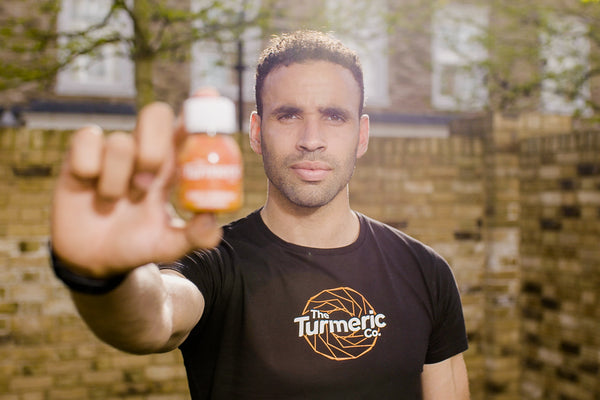
The Hal Robson-Kanu Guide To Fitness & Nutrition
Gain exclusive insight into habits that will make every day a healthy and fulfilling one.