


Turmeric suits most people, but for some it's a firm no, and for others it's a conversation to have before the first shot.
Who should avoid turmeric? Medicines advisers at NHS Wales say anyone with gallstones, a bile duct problem, or liver disease should, and that anyone taking it as a medicine should stop at least two weeks before planned surgery. Pregnancy, breastfeeding, blood thinners, diabetes medicines, and cancer treatment all call for medical advice first.
Key takeaways
- NHS Wales advises avoiding turmeric and curcumin with gallstones, bile duct problems, or liver disease.
- European herbal medicine guidance doesn't recommend medicinal turmeric in pregnancy or breastfeeding, or for under-18s.
- Blood thinners, diabetes medicines, and cancer treatment all need a conversation with the people treating you.
- Most cautions relate to medicinal doses and concentrated extracts, rather than turmeric in your cooking.
- If you think you're having a severe allergic reaction, call 999.
Who should avoid turmeric altogether?
Anyone with gallstones, a blocked or inflamed bile duct, liver disease, or a known turmeric allergy.
The Welsh Medicines Advice Service lists bile duct obstruction, cholangitis (an inflamed bile duct), liver disease, gallstones, and any biliary disease, and says extracts can trigger biliary colic. The EU herbal monograph on turmeric gives the same list, citing a possible effect on bile secretion, and rules out use by anyone hypersensitive to it. Our guides to turmeric and gallstones and turmeric and liver health explain why.
Allergy is rare, and our turmeric allergy guide covers the signs. Anaphylaxis is a life-threatening reaction, so call 999 if you think someone is having one. Signs include swelling of the throat and tongue, difficulty breathing or breathing very fast, and wheezing, coughing, or noisy breathing.
| Who | What the guidance says | Who to ask |
|---|---|---|
| Gallstones, bile duct problems, or liver disease | Avoid | Your GP |
| Pregnant or breastfeeding | Not recommended as a herbal medicine | Your midwife or GP |
| On blood thinners | Bleeding risk might be increased | Your pharmacist or GP |
| On diabetes medicines | Tell a professional before starting | Your pharmacist or GP |
| Having cancer treatment | Not recommended | Your oncology team |
| Having planned surgery | Stop medicinal turmeric at least two weeks before | Your surgical team |
| Children | Herbal medicines not recommended | Your GP |
Does this include turmeric in food?
Mostly not, since these warnings are about medicinal doses.
Medicinal turmeric is defined as turmeric taken as a medicine or concentrated supplement, rather than the spice on your plate. Cancer Research UK says turmeric used in cooking is very safe. Nearly all reported interactions relate to medicinal doses or concentrated curcumin extracts.
A shot of ours is a juiced whole-food drink with far less curcuminoid than an extract capsule. Direct evidence on drinks is limited, though, and the interaction evidence overall is mostly lab and animal work. A daily shot is also more than a pinch of spice, so treat everything below as applying to shots unless your pharmacist or GP says otherwise. With gallstones, the dose argument doesn't help at all, because, as our gallstones guide explains, the gallbladder responds to amounts found in food.
What if you're pregnant or breastfeeding?
Keep turmeric to your cooking, and ask your midwife or GP about anything more.
The EU monograph says safety in pregnancy and breastfeeding hasn't been established, so it doesn't recommend medicinal use. The NHS says you shouldn't take herbal medicines if you're pregnant or breastfeeding, and that not enough is known about herbal remedies when breastfeeding to guarantee they're safe. Nobody has studied a daily shot in pregnancy, so ask before starting one. Ashwagandha is a clearer case, and our ashwagandha guide says not to take it if you're pregnant or trying to become pregnant.
What if you take a blood thinner?
Speak to your pharmacist or GP before taking turmeric regularly.
Turmeric may affect clotting when taken in large amounts. NHS Wales says the risk of bleeding might be increased alongside anticoagulants and antiplatelets, naming warfarin and clopidogrel. Arthritis UK goes further, saying people on anticoagulants or with bleeding disorders should avoid it. Ginger is on the same NHS Wales list, which matters for blends. Our turmeric and warfarin guide has the detail.
What if you take diabetes medicines?
Tell your healthcare professional before you start, because your blood sugar could drop too low.
NHS Wales says turmeric might reduce blood glucose and raise the risk of hypoglycaemia alongside antidiabetic medicines. See turmeric and diabetes medication.
What about cancer treatment?
NHS Wales doesn't recommend it during anti-cancer therapy. Speak to your oncology team.
What about before surgery?
NHS Wales says to stop turmeric taken as a medicine at least two weeks before elective surgery. If you're having a shot daily, tell your surgical team and follow what they say.
Who else should check first?
Several groups, because their medicines or conditions change the picture.
NHS Wales flags each of these, so speak to your pharmacist or GP if you:
- have a gastrointestinal condition
- have a heart rate or rhythm problem
- have a hormone-sensitive condition such as breast cancer or endometriosis, or take HRT
- take immunosuppressants, such as tacrolimus
- take a medicine with a narrow therapeutic index, such as lithium, digoxin, or phenytoin
- take a statin or sulfasalazine
The NHS also says you shouldn't take herbal medicines with kidney problems.
Kidney stones are a thinner case. In a small trial of 11 healthy adults, supplemental turmeric raised urinary oxalate, and the authors suggested that could raise stone risk in susceptible people. We found no trial testing that directly, so if you've had kidney stones, raise it with your GP.
Low iron is similar. Curcumin binds iron, and in mice on the lowest-iron diet it lowered haemoglobin and serum iron. One published case describes iron deficiency anaemia in a 66-year-old taking six 538mg extract capsules a day, which resolved after stopping. If you have iron deficiency anaemia, or heavy periods, ask your GP, and read our guide to turmeric and iron absorption.
Can children have turmeric?
In food, yes. As a supplement or daily shot, not without your GP's advice.
The NHS says herbal medicines are not recommended for children, since not enough is known about their safety, and the EU monograph says use under 18 hasn't been established. Our shots are formulated for adults, and our guide to whether children can have turmeric covers the rest.
Which shot suits everyone else?
If none of this applies to you, the one with the most turmeric.
NHS Wales says turmeric is usually well tolerated, although most studies have been short, and our guide to turmeric side effects covers what to expect. Raw Turmeric Original lists turmeric root at 30%, the highest in our range, in a cold-crushed, whole watermelon-based blend. In the first clinical trial of our blends, independent researchers at Nottingham Trent University found lower CRP, a blood marker of inflammation, and less soreness in elite male footballers after matches. We're clearly not a neutral party.
If you think turmeric has caused a side effect, tell your GP or pharmacist, and you can report it through the MHRA's Yellow Card Scheme.
The takeaway
Avoid turmeric if you have gallstones, a bile duct problem, or liver disease. If you're pregnant, breastfeeding, having cancer treatment or surgery, or taking regular medicines, ask the people treating you before you start. For everyone else, a Raw Turmeric Original with breakfast is an easy way to make turmeric a daily habit.
Frequently asked questions
Is turmeric safe for most people?
Yes. NHS Wales says it's usually well tolerated when taken by mouth, with side effects that are often mild, although most studies have been short.
Is cooking with turmeric a problem if I'm on the avoid list?
Cancer Research UK says turmeric in cooking is very safe, and the warnings focus on medicinal products. A pinch in a curry is far less than a supplement, but if you have a gallbladder or liver condition, ask your GP.
Which medicines don't mix with turmeric?
The main ones flagged are blood thinners, diabetes medicines, statins, cancer treatment, immunosuppressants, and sulfasalazine. Your pharmacist can check anything you take.
What signs mean I should stop and get help?
Call 999 for swelling of the throat or tongue, or trouble breathing. Stop taking it and get urgent advice from your GP or 111 if your skin or the whites of your eyes turn yellow, as our liver health guide explains.
Does the ginger in a shot change anything?
It can. NHS Wales lists ginger among supplements with anticoagulant or antiplatelet effects, so if you take a blood thinner, mention it along with the turmeric, and take the ingredients list with you.
Should I stop my medicine to take turmeric?
No. Never stop a prescribed medicine to make room for a supplement or shot. Talk to your pharmacist or GP, who can tell you whether the two can sit together.

Raw Turmeric Original Shot Box
Our Original Turmeric Shot packs a real punch thanks to a whopping 35g of fresh raw turmeric root used to make each shot.
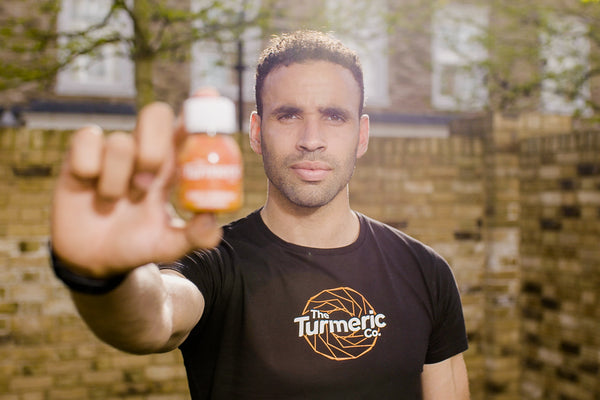
The Hal Robson-Kanu Guide To Fitness & Nutrition
Gain exclusive insight into habits that will make every day a healthy and fulfilling one.