


Most people start a turmeric habit to feel better, so a queasy stomach or an extra trip to the loo in the first week can feel like a poor trade.
Turmeric and an upset stomach do go together for some people, mostly at supplement doses. A review of eight curcumin trials found stomach side effects were more common with curcumin capsules than with a placebo. They tend to be mild, and changing the dose, the timing, or the blend often helps.
Key takeaways
- Stomach upset is one of the side effects people report most often with turmeric supplements, and it's usually mild.
- Concentrated curcumin capsules are more likely to cause it than turmeric in food or drink.
- Taking turmeric with breakfast rather than on an empty stomach is the simplest change to try.
- In turmeric blends, other ingredients such as ginger or coffee alongside can be the real cause.
- See a GP if indigestion keeps coming back, or if you notice any of the warning signs the NHS lists.
Why do turmeric and an upset stomach sometimes go together?
Usually because of a concentrated dose, an empty stomach, or something else in the mix.
Curcumin, the best-studied compound in turmeric, is taken in trials at doses far beyond anything in a curry. In the review above, which pooled eight trials with 389 people, those taking curcumin had about three times the odds of stomach side effects as those on a placebo. The numbers involved were small, so the exact size of the risk is uncertain, but the direction is clear enough to take seriously.
Dyspepsia is defined as indigestion, the umbrella term doctors use for pain, discomfort, or a burning feeling in the upper tummy, often after eating. It's one of the symptoms people most often mean when they say turmeric has upset their stomach, along with nausea and looser stools.
How common are stomach side effects from turmeric?
Not very, and when they happen they're generally mild.
In a University of Michigan study, 24 healthy adults took single doses of curcumin from 500mg up to 12,000mg. Seven reported side effects, all of them mild, including diarrhoea in two people, and none appeared to depend on the dose. The researchers described tolerance of these very high single doses as excellent.
In joint research, curcumin has compared well with common painkillers. A review of 11 knee osteoarthritis trials with 1,009 people found curcuminoids caused significantly fewer stomach side effects than NSAIDs, the anti-inflammatory painkillers, and had a safety profile similar to placebo.
| What was studied | Who took part | What the research found |
|---|---|---|
| Single curcumin doses up to 12,000mg | 24 healthy adults | Mild side effects in seven, none linked to dose |
| 11 knee osteoarthritis trials | 1,009 people | Fewer stomach side effects than NSAIDs |
| An indigestion trial in Bangkok | 132 adults with indigestion | Curcumin eased symptoms about as well as omeprazole |
That last row is a reminder that turmeric isn't usually hard on the stomach. In a randomised, double-blind trial in people with functional dyspepsia, curcumin eased pain and other symptoms more than a placebo over four weeks, and our guide to turmeric for bloating looks at that research.
What can you change if turmeric upsets your stomach?
The dose, the timing, and what you take it with.
Start with food. Having turmeric with breakfast rather than first thing on an empty stomach is the easiest change, and many people find it's all they need. If you take a curcumin capsule, a lower dose or a turmeric drink instead may suit you better, since capsules concentrate far more curcumin than food does.
Next, look at the timing of your evening. The NHS advice on indigestion suggests not eating for 3 to 4 hours before bed, so a spicy dinner late at night is worth moving earlier. The same page recommends cutting down on tea, coffee, cola, and alcohol, which matters if your shot sits next to your morning coffee. Our guide to taking a shot before or after coffee goes into that.
Finally, give it a week or two at a lower amount before you decide turmeric isn't for you. A small, steady habit is easier on the stomach than a big dose now and then.
Could it be another ingredient?
Often, yes, especially in blends.
Ginger is the usual suspect. It can cause heartburn, burping, or stomach upset in some people, so in a turmeric and ginger blend, the ginger may be what you're reacting to. Our guide to ginger shot side effects covers what's normal.
Fruit can play a part too. Some fruits carry more fructose than glucose, and in people with a sensitive gut that can mean wind or bloating. If you're unsure which ingredient is behind it, try one change at a time for a few days, so you can tell what made the difference.
When should you see a GP?
If indigestion keeps coming back, or if you notice any warning signs.
The NHS says to see a GP if you keep getting indigestion, if it causes severe pain, or if you're losing weight without trying, find it hard to swallow, keep being sick, or have blood in your vomit or poo. A pharmacist can also help with antacids and with checking whether a medicine you take might be the cause, as some common painkillers such as ibuprofen can trigger indigestion.
If you take prescription medicines, speak to your pharmacist or GP before taking turmeric regularly. Our guide to turmeric side effects covers the full picture, including who should check first.
Which turmeric shot is easiest on the stomach?
The one without ginger, taken with breakfast.
Raw Turmeric Original has no ginger in it, which makes it the gentlest place to start if ginger tends to disagree with you. It's raw turmeric root at 30%, the most in our range, cold-crushed with whole watermelon, pineapple, and lemon, plus magnesium and vitamin C, and our trade-secret BioMax Uptake Blend®, which includes black pepper, at a 0.1% inclusion.
It's a juiced whole-food drink rather than a concentrated extract, so it carries far less curcumin than a capsule. It's also the shot independent researchers at Nottingham Trent University gave professional footballers twice a day in the first clinical trial of our blends, which found lower inflammation and less soreness after matches. We're clearly not a neutral party.
The takeaway
Turmeric and an upset stomach is usually a question of dose and timing. Concentrated capsules are the likeliest cause, and the effects are generally mild. Take turmeric with food, keep the dose steady rather than large, and check whether ginger or coffee alongside is the real trigger. See a GP if indigestion keeps returning or comes with any of the NHS warning signs.
If you'd like turmeric without the ginger, a single Raw Turmeric Original with breakfast is the gentlest way to build the habit.
Frequently asked questions
Can turmeric upset your stomach?
It can, mostly at the higher doses used in curcumin supplements. Stomach upset, nausea, and looser stools are the usual complaints, and they're usually mild.
Should I take turmeric on an empty stomach?
If your stomach is sensitive, it's better with food. Having turmeric with breakfast is the simplest change to try if it has been upsetting you.
Can turmeric cause diarrhoea?
Occasionally, at high supplement doses. In one study of single doses up to 12,000mg, two of 24 people had diarrhoea, and it didn't appear to depend on the dose.
Is turmeric good or bad for indigestion?
It can be either, depending on the person and the dose. A trial in people with indigestion found curcumin eased their symptoms, while some people find concentrated capsules upset their stomach.
Why does my turmeric shot give me heartburn?
Ginger is a common cause in blends that contain it, and a shot taken with coffee on an empty stomach can add to it. Try a blend without ginger, with breakfast.
When should I stop taking turmeric?
Stop and speak to your GP if your symptoms are severe or don't settle, or if you notice any of the NHS warning signs, such as blood in your vomit or poo, trouble swallowing, or unexplained weight loss.

Raw Turmeric Original Shot Box
Our Original Turmeric Shot packs a real punch thanks to a whopping 35g of fresh raw turmeric root used to make each shot.
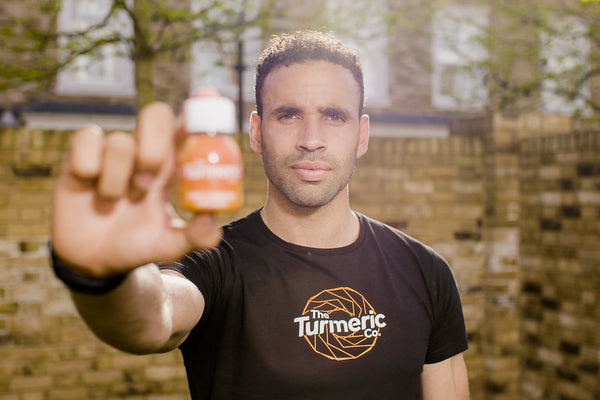
The Hal Robson-Kanu Guide To Fitness & Nutrition
Gain exclusive insight into habits that will make every day a healthy and fulfilling one.