


Headlines about curcumin swing between miracle and myth, often about the same handful of studies, so it helps to know what to look for before you decide what a trial really found.
Curcumin clinical trial results are easiest to judge once you know what each study compared. A University of Nottingham analysis of 198 osteoarthritis trials found that a placebo on its own relieved pain, which is why a curcumin study without a placebo group can't tell you how much of the benefit came from the curcumin.
Key takeaways
- The strongest curcumin trials compare it with a placebo, assign people to groups at random, and keep everyone unaware of who's taking what.
- Pain is reported by the people in the trial, so it's the outcome most open to a placebo effect. Blood markers such as CRP are measured in a lab.
- In osteoarthritis, curcumin has shown large short-term effects on pain, and it has caused fewer side effects than common painkillers.
- Small trials, short trials, and very different products make curcumin research harder to compare than it looks.
- One positive trial is a signal. Several trials pointing the same way, pooled in a review, are evidence.
What is a clinical trial?
A test of a treatment in people, set against a comparison.
A clinical trial is defined as a study that tests a treatment in people against a control, which the NHS guide to clinical trials describes as either a dummy treatment, called a placebo, or a standard treatment already in use. In most trials, a computer randomly decides who goes into which group, so the groups start out alike.
Many trials also use blinding, where nobody knows who has been given which treatment. The NHS explains that this helps reduce bias when the results are compared. A trial that does all three, placebo, randomisation, and blinding, is usually written up as a randomised, double-blind, placebo-controlled trial, and it's the design to look for first.
Why does a placebo matter so much in curcumin trials?
Because much of the curcumin research is on pain, and pain responds to expectation.
The Nottingham analysis pooled 198 trials of osteoarthritis treatments, covering medicines, non-drug treatments, and surgery. People in the placebo groups reported a meaningful drop in pain, while people who received no treatment at all reported almost none. The placebo response was bigger in trials with higher starting pain, in larger trials, and when the dummy treatment was given by injection or needle.
So when a curcumin study reports that pain fell, the first question is what it fell compared with. Against a placebo, the difference is the part curcumin can claim. Against nothing at all, some of that improvement would have happened anyway.
What do curcumin clinical trial results show for pain?
The best-studied area is knee osteoarthritis, and the results there are encouraging.
A University of Sydney review in the British Journal of Sports Medicine looked at 20 supplements across 69 studies. Curcumin and turmeric extract were among only seven with large, clinically important effects on osteoarthritis pain in the short term. The authors were clear about the limits: the quality of evidence ranged widely, some of the large effects came from few studies, and no supplement showed clinically important relief over the long term.
A 2024 network analysis of 23 knee osteoarthritis studies, with 2,175 patients, found curcumin lowered pain scores compared with placebo and caused fewer side effects than NSAIDs, the anti-inflammatory painkillers often used for joint pain. For the wider picture on joints, see our guide to turmeric for arthritis.
What about blood markers such as CRP?
They're harder to fake, which makes them valuable, but they answer a different question.
CRP, or C-reactive protein, is a protein your liver releases when there's inflammation in the body. Because it's measured in a lab rather than reported by the person, a placebo has little room to move it. A meta-analysis of curcumin trials found CRP fell significantly compared with placebo across nine studies, by about 3.7mg/L on average.
The catch is that a marker isn't a feeling. A lower CRP is a sign of less inflammation in the blood, but on its own it doesn't tell you whether someone moves more easily or hurts less. The most useful trials measure both.
| Question to ask | Why it matters |
|---|---|
| Was there a placebo group? | It shows how much of the change was down to curcumin |
| Were people randomly assigned? | It keeps the groups alike at the start |
| Did anyone know who took what? | Blinding reduces bias in what people report |
| How many people took part? | Bigger trials give steadier answers |
| How long did it run? | Short trials can't show long-term effects |
| What exactly was taken? | Curcumin products vary widely in strength and form |
Why are curcumin trials so hard to compare?
Because the trials are small, short, and test very different products.
A 2025 review of 21 knee osteoarthritis trials noted sample sizes ranging from 24 to 160 people, which is small for pain research. A review of curcumin in fatty liver disease found doses from 50mg to 3,000mg a day, mostly over 8 to 12 weeks, and warned that most studies never independently tested the product they used.
That last point matters more than it sounds. Curcumin is sold as plain extract, with piperine, in micelles, in phospholipid complexes, and more, and each behaves differently in the body. Two trials can both say "curcumin" and be testing very different things. Our guide to the curcumin dose in studies goes through why those numbers are so hard to line up.
Statistical significance is the other trap. A result can be statistically significant, meaning unlikely to be chance, and still be too small for anyone to notice in daily life. That's why the British Journal of Sports Medicine review only counted effects above a set size as clinically important.
What does a real-world trial look like?
Our own first trial is a good example of a pilot study, and of what comes after one.
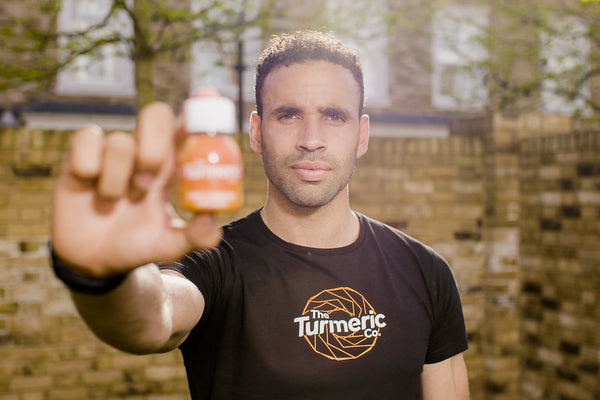
Independent researchers at Nottingham Trent University ran the first clinical trial of our blends with 24 elite male footballers through eight competitive matches. Sixteen drank two 60ml shots of Raw Turmeric Original a day, and eight were a comparison group. The turmeric group reported less leg and whole-body soreness, and their CRP response after matches was lower. There was no difference in creatine kinase, a marker of muscle damage, or in jump and strength tests.
The researchers were open about the design. Because the shot was a new product and the players were professionals, they couldn't blind the players or give a placebo, and they recommended a placebo condition for future studies. That's how research is meant to build: a promising signal in a real setting, then a tighter test. A randomised trial of Raw Turmeric Original in healthy older adults is now under way, and our clinical trial news piece covers the first one in more detail. We're clearly not a neutral party, so we'd rather you read the paper yourself.
Where does a turmeric shot fit?
As a daily habit, built on the kind of turmeric that was actually trialled.
Raw Turmeric Original is the shot from that trial, with raw turmeric root at 30%, the most of any blend we make, cold-crushed with whole watermelon, pineapple, and lemon, and with magnesium and vitamin C added. It carries our trade-secret BioMax Uptake Blend®, which includes black pepper, at a 0.1% inclusion. It's a food rather than a capsule, so it doesn't promise a trial dose, and it's designed to be easy to take every day.
The takeaway
Curcumin clinical trial results are worth reading closely. Look for a placebo, randomisation, and blinding, check how many people took part and for how long, and notice whether the result was pain people reported or a marker measured in a lab. On those terms, curcumin has some genuinely encouraging findings, particularly for short-term osteoarthritis pain, and the research is still growing.
If you'd like turmeric as part of your routine, Raw Turmeric Original is the shot independent researchers chose to test, and one a morning is an easy habit to keep.
Frequently asked questions
Has curcumin been proven to work in clinical trials?
Curcumin has shown large short-term effects on osteoarthritis pain in reviews of several trials, and it has lowered CRP compared with placebo. The evidence is still developing, especially for long-term effects and for conditions beyond the joints.
What is a placebo-controlled trial?
A trial where one group takes the real treatment and another takes a dummy version that looks the same. Comparing the two shows how much of any change came from the treatment itself.
Why do curcumin studies disagree?
They often use different products, doses, and lengths, in small groups of people with different conditions. Pooled reviews help by combining them, but they can only be as good as the trials they include.
Is a lower CRP the same as feeling better?
Not necessarily. CRP is a blood marker of inflammation, and a lower level is a good sign, but how you feel is measured separately, usually with pain and function scores.
How can I check a curcumin study myself?
Search the study's title on PubMed, read the abstract, and check whether it used a placebo, how many people took part, and how long it ran. Then look at who funded it and whether the authors declared any interests.
Did The Turmeric Co. trial use a placebo?
No. The first trial of our shots compared players drinking them with players who didn't, because blinding wasn't practical with a new product in professional footballers. The researchers recommended a placebo-controlled design for future studies, and a randomised trial in older adults is under way.

Raw Turmeric Original Shot Box
Our Original Turmeric Shot packs a real punch thanks to a whopping 35g of fresh raw turmeric root used to make each shot.
The Hal Robson-Kanu Guide To Fitness & Nutrition
Gain exclusive insight into habits that will make every day a healthy and fulfilling one.