


Collagen for joints is everywhere right now, and the interesting question isn't whether collagen matters. It's whether swallowing it does anything useful.
Collagen is the main structural protein in cartilage, tendons and ligaments, so the logic is appealing. Digestion breaks it into amino acids and peptides rather than delivering it intact to your knees. The evidence for supplements is mixed and developing, while vitamin C's role in normal collagen formation is an authorised, well-established claim.
Key takeaways
- Your body makes collagen from amino acids and vitamin C. It doesn't route swallowed collagen straight to your joints.
- Vitamin C contributing to normal collagen formation for the normal function of cartilage and bones is an authorised claim, unlike most collagen marketing.
- Trial evidence for collagen supplements and joint comfort exists but is less consistent than the marketing suggests.
- Loading the joint through strength work is what signals cartilage and tendon to adapt in the first place.
What does collagen actually do in a joint?
It provides the structure. Collagen is defined as the fibrous protein that forms the scaffold of connective tissue, and it's the main protein in cartilage, tendons, ligaments and bone.
Cartilage is largely a collagen framework holding water and other molecules, and that structure is what lets a joint glide and absorb load. So the raw material genuinely matters.
Your body builds it continuously from amino acids, and it needs vitamin C to do so. Production declines gradually with age, which is the honest basis for the interest in topping it up.
The leap the marketing makes is from "collagen is important in joints" to "eating collagen puts collagen in your joints". Those are different claims, and only the first is settled.
Does collagen for joints reach the joint at all?
Not directly. Collagen is a protein, and digestion breaks proteins down before absorption.
What arrives in your bloodstream is amino acids and small peptides, not intact collagen looking for a knee. Your body then uses those building blocks wherever it decides they're needed, which isn't something a supplement gets to direct.
The more interesting hypothesis is that certain collagen peptides may act as signals rather than raw materials, prompting the cells in cartilage and tendon to increase their own production. Some trials in joint comfort and tendon health have reported benefits, and results vary by peptide type, dose and population.
So the fair summary is: plausible mechanism, some supportive trials, not the settled science that supplement advertising implies. The evidence is still developing.
| Claim you'll see | How it holds up |
|---|---|
| Collagen is essential to cartilage | True, and not in dispute |
| Swallowed collagen rebuilds cartilage directly | No. It's digested into amino acids first |
| Collagen peptides may signal cells to make more | Plausible, with some trial support, still developing |
| Vitamin C is needed for normal collagen formation | Authorised claim, well established |
| Collagen replaces strength work for joints | No. Loading is what drives adaptation |
The part that is settled: vitamin C
Vitamin C contributes to normal collagen formation for the normal function of cartilage and bones. That's an authorised claim, and it's the least glamorous, most dependable sentence in this article.
Without adequate vitamin C, collagen synthesis genuinely fails, which is what scurvy is. Most people in the UK get enough, and the NHS guide to vitamin C covers where it comes from and how much you need.
The practical point: if you're spending money on collagen support, the vitamin C alongside it isn't the afterthought on the label. It's the part with the regulatory backing.
Protein intake matters too, since amino acids are what your body builds collagen from. The British Nutrition Foundation is a useful reference on getting enough.
Where does turmeric come in?
Different job. Collagen is about the structure. Turmeric is about the discomfort and the inflammatory environment around it.
Curcumin's joint evidence is the stronger of the two, particularly in knee osteoarthritis, where a systematic review of randomised trials reported improved symptoms and good tolerability, and a 2024 review of meta-analyses reached similar conclusions across osteoarthritis.
That's why the two get paired: one aimed at the building blocks, one at how the joint feels while you use it. Neither replaces loading the joint properly. Our guide to turmeric for joints goes through that evidence in full.
Raw Turmeric & Pro-Collagen puts both in one cold-crushed, watermelon-based shot: Plant-based Pro-Collagen alongside raw turmeric root, beetroot, pomegranate, zinc and vitamin C, with our trade-secret BioMax Uptake Blend®, which includes black pepper, for the turmeric side. Being plant-based, it suits people who'd rather not take a marine or bovine collagen.
Worth knowing on the bone side: the Royal Osteoporosis Society granted The Turmeric Co. a Bone Health Accreditation for Raw Turmeric & Vitamin C & D3 specifically, rather than for the range.
What helps joints more than either
Using them. Cartilage and tendon adapt to load, and nothing you swallow substitutes for the signal that loading provides.
This is the part no supplement substitutes for. NICE (NG226) makes exercise and weight management the core of osteoarthritis care, and mechanical load is also the signal that tells connective tissue to remodel at all. The NHS strength and flexibility pages are a fine starting point.
Eat enough protein, get your vitamin C, keep moving. Supplements sit on top of that, never instead of it!
The takeaway
Collagen isn't a con, and it isn't the miracle the ads imply either. It's the structural protein your joints are built from, your body makes it from amino acids and vitamin C, and the evidence that swallowing more of it helps is promising rather than proven.
What's beyond argument is that you need vitamin C to make it, that you need enough protein to supply it, and that loading your joints is what tells your body to bother.
If you want the collagen and turmeric angle in one daily habit, Raw Turmeric & Pro-Collagen is the straightforward way to do it, with the vitamin C and zinc already in the bottle and nothing to measure out. One a day, alongside the strength work rather than instead of it.
If you have a diagnosed joint condition or take regular medication, check with your GP before adding supplements.
Frequently asked questions
Does collagen actually help joints?
The evidence is mixed and still developing. Collagen is genuinely the main structural protein in cartilage, but swallowed collagen is digested into amino acids rather than delivered intact to a joint. Some trials of collagen peptides report improvements in joint comfort, with results varying by preparation and population. Treat it as promising rather than settled.
Is plant-based collagen as good as marine or bovine collagen?
They work differently. Animal-derived collagen supplies collagen peptides directly, while plant-based formulations typically provide the amino acids and cofactors your body uses to make its own. Head-to-head evidence is limited. Plant-based options suit people avoiding animal products, and the vitamin C alongside matters either way.
How long does collagen take to work for joints?
Trials in this area usually run for three to six months before measuring outcomes, so this is a long-horizon habit rather than a quick fix. If you're going to try it, commit to a proper stretch and keep up the strength work throughout, since that's doing more than the supplement is.
Should I take collagen and turmeric together?
They target different things, so there's no conflict in taking both. Collagen relates to the structural building blocks, while curcumin has been studied for joint discomfort and inflammatory signalling. Curcumin currently has the stronger joint evidence of the two. Some shots combine them, which saves taking two products.
Do I need vitamin C with collagen?
Yes, and this is the best-established part of the whole picture. Vitamin C contributes to normal collagen formation for the normal function of cartilage and bones, which is an authorised claim. Most people in the UK get enough from diet, but if you're buying a collagen product, the vitamin C in it is doing real work.
Can collagen reverse arthritis?
No. Nothing available rebuilds worn cartilage or reverses osteoarthritis, and any product suggesting otherwise is overselling. What's realistic is supporting comfort and function alongside exercise, weight management and the care your GP arranges. If you have arthritis, discuss supplements with them rather than substituting.
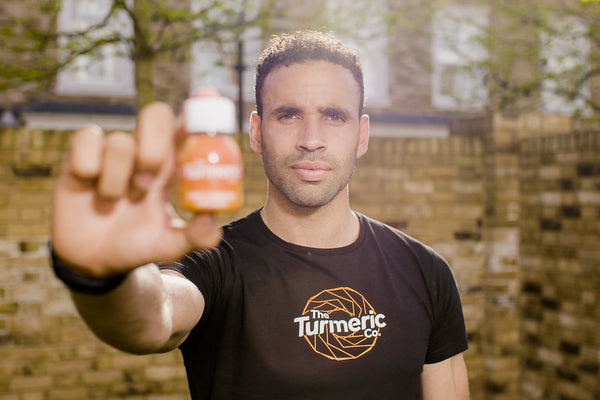
The Hal Robson-Kanu Guide To Fitness & Nutrition
Gain exclusive insight into habits that will make every day a healthy and fulfilling one.