


The best turmeric shots UK shoppers can buy aren't the ones with the loudest label. They're the ones that still make sense when you turn the bottle over and read it.
A good turmeric shot names raw turmeric root high on the ingredients list, adds something to help your body absorb it, keeps added sugar low, and tells you clearly how it's made. Judge on cost per serving, not the shelf price. The brand name on the front matters far less than what the back of the bottle actually says.
Key takeaways
- Read the ingredients list first: turmeric root should sit near the top, not near the water and sugar at the bottom.
- Look for raw and cold pressed rather than heat treated from concentrate, plus black pepper or a little fat to aid absorption.
- Check added sugar and juice fillers, then compare cost per day rather than cost per bottle.
- Certifications like Sugarwise and BRCGS food safety tell you something a marketing claim can't.
What makes the best turmeric shots UK shoppers can buy?
The best turmeric shots UK shoppers can buy share a short, honest ingredients list where turmeric root does the heavy lifting, not the filler. Everything else on this page is really about learning to spot that from the label alone.
A turmeric shot is defined as a small single-serve drink built around turmeric root, drunk in one go rather than sipped like a juice. Serving sizes vary from brand to brand, which is the first reason to compare cost per serving rather than the price on the front. Most are juice blends, so the base matters as much as the turmeric.
The trap is that almost every bottle claims to be the strongest or the purest. Those words aren't regulated in a way that helps you compare. The ingredients list is, because law requires it to run in order of weight, from most to least.
So the single most useful habit is to flip the bottle over and see how far up the list turmeric root actually sits.
How do you read a turmeric shot label?
Start at the top of the ingredients list, because ingredients are listed by weight. If turmeric root sits below water and a couple of cheap juice concentrates (like apple or orange), there's less turmeric in there than the front of the bottle suggests.
Use a bit of judgement, though. In a shot built around a second active, such as an immunity or collagen blend, turmeric can sit lower down for a good reason. What should worry you is water and filler juice ahead of it, not another working ingredient.
Next, look at how the turmeric is described. Raw and cold pressed means the root is pressed without heavy heat, which is gentler on the plant compounds. Heat treated or made from concentrate usually means a processed extract reconstituted with water, which is cheaper to produce and harder to trace back to the whole root. If turmeric juice is listed as an ingredient, steer clear!
One more note here. Turmeric powder is brilliant for cooking and colour, but a pinch stirred into a drink is a flavour, not a meaningful daily dose of recovery support. If a label leans on powder to look potent, treat that as a flavour claim.
For a plain-English walk through of the format itself, our turmeric shots pillar covers the basics without the sales pitch.
Does the shot help you absorb the turmeric?
This is the point most shoppers miss. Curcumin, the most studied compound in turmeric, is poorly absorbed on its own, so a well made shot includes something to help.
The classic helper is black pepper. Its active compound, piperine, has been shown to increase curcumin absorption substantially: one much cited 1998 study reported a rise of around twentyfold in a small group of healthy volunteers. That single trial has since been joined by a 2023 review in Phytotherapy Research covering the preclinical and clinical work on curcumin taken with piperine, so the principle rests on more than one famous number. A little fat in the blend can help too, since curcumin is fat soluble.
If a shot lists no black pepper, no fat, and no absorption support of any kind, you may be paying for turmeric your body struggles to use.
What about added sugar and juice fillers?
Watch the sugar. A shot marketed as a health habit shouldn't read like a soft drink once you check the label.
Many shots use fruit juice as a base, which is fine in itself, but some lean on it to make a thin turmeric content taste good. The NHS advises adults have no more than 30g of free sugars a day, and juice sugars count toward that. A daily shot with several grams of added sugar quietly eats into your allowance.
Scan for added sugar, syrups, and concentrated juices high up the list. A short base with a clear purpose beats a long one built to mask a weak formula.
Format, freshness, and shelf life
How a shot is stored tells you how it was made. Fresh and frozen shots are pressed and then frozen to lock in the plant compounds without heavy preservatives or heat.
Ambient bottles that sit on a warm shelf for many months usually rely on more processing or pasteurisation to stay stable, which is convenient but a trade-off. Neither is wrong, but freshness and a short, clean ingredients list tend to travel together.
Do bear in mind that most shots are juice blends, so "made from raw turmeric root" describes the star ingredient, not the whole bottle. That's normal. It just means the base deserves a look too.
Which certifications are worth having?
Certifications are worth having because they're checked by someone other than the brand's marketing team. They don't prove a shot works, but they do prove specific things are true.
Vegan certification confirms the formula and process. Sugarwise verifies sugar claims independently. BRCGS is a recognised food safety standard for how the product is made.
None of these is essential on its own. Together, they're a reasonable shortcut for trusting what the label says.
Keep it all in proportion, though. The British Dietetic Association makes the point that supplements work best on top of a decent diet rather than in place of one, and a daily shot is easiest to justify when it's adding something your week is genuinely short of.
Cost per day, not cost per bottle
Always compare cost per day, not the price on the shelf. A cheaper multipack that you take daily can cost more over a month than a pricier box, or less, depending on serving size and how many shots you actually get.
Work out the price per shot, then decide whether the formula behind it earns that. A weak shot at any price is expensive, because you're paying for filler.
Here's what a strong label looks like next to a weak one.
| What to check | A good label | A weak label |
|---|---|---|
| Turmeric root position | Near the top of the list | Below water and several concentrated juices |
| How it's made | Raw, cold pressed | From concentrate, heat treated, 'turmeric juice' |
| Absorption help | Black pepper and/or a little fat | Nothing added |
| Added sugar | Low or none, verified | Juice concentrates high up |
| Format | Fresh and frozen, short list | Ambient, long ingredients list |
| Certifications | Vegan, Sugarwise, BRCGS | None, or brand claims only |
| How you compare price | Cost per day | Cost per bottle only |
How does The Turmeric Co.'s range measure up?
We're clearly not a neutral party here, so weigh this against the checklist above rather than taking our word for it.
Our shots are raw and cold-crushed, with black pepper built into every blend to support absorption. That element is our BioMax Uptake Blend®, a trade-secret, optimised black-pepper blend rather than a bare pinch of pepper. The shots are pressed and frozen for freshness rather than sat on an ambient shelf.
Apply the ingredients test to us as well. In Raw Turmeric Original, turmeric root is the second ingredient after watermelon - an ingredient in which we crush whole, fresh watermelon flesh to obtain. In the blends built around a second active, such as Raw Turmeric & Vitamin C & D3, turmeric sits further down the list, because that shot is built to do an immunity job rather than lead on turmeric alone. Read the back of ours the same way you'd read anyone else's.
On the independent marks, they carry Great Taste awards, Vegan trademarks, Sugarwise certifications, and AA+ BRCGS food safety grading (the highest possible tier of food safety and quality achievement awarded through an unannounced audit process), plus a Royal Osteoporosis Society Bone Health Approved status for Raw Turmeric Vitamin C & D3. Raw Turmeric Original is the everyday recovery shot, while Raw Turmeric & Ginger leans into mobility.
Apply the sugar test to us too. They're watermelon-based blends, so they're a pleasant daily drink rather than a pure extract, and any sugars are naturally occurring sugars from that base. The Sugarwise mark is the independent check on that, which is exactly the sort of outside verification we'd tell you to look for on anyone else's bottle. On cost per day, a subscription usually works out lower than buying single boxes. If you're still weighing whether the format suits you, our honest take on whether turmeric shots are worth it is a fair place to sanity-check us.
If you have a health condition or take medication, check with your GP before adding any new supplement to your routine.
The bottom line
The best shot is the one that passes the label test, and once you know what to look for, most bottles sort themselves quickly. Turmeric root near the top, raw and cold pressed, real absorption help, low sugar, a format that protects freshness, and a fair cost per day.
Whole-root shots make that easy to keep up, because there's nothing to swallow, measure, or forget. If you want a daily habit that ticks the checklist rather than the marketing, try a box of Raw Turmeric Original and judge it against everything above.
Frequently asked questions
What should I look for in the best turmeric shots UK brands sell?
Check that turmeric root sits near the top of the ingredients list, that it's raw and cold pressed rather than from concentrate, and that there's black pepper or a little fat to aid absorption. Then look at added sugar, freshness, certifications, and cost per day.
Are fresh and frozen turmeric shots better than ambient ones?
On balance, yes. Fresh and frozen shots are pressed and frozen to protect the plant compounds without heavy heat or preservatives, and they usually come with shorter ingredients lists. Ambient shots buy their long shelf life with more processing, so if you have the freezer space, the fresher route is the better one.
Does black pepper really help turmeric absorption?
Curcumin is poorly absorbed on its own, and black pepper's piperine has been shown to raise its absorption significantly in small studies. A little fat can help too, since curcumin is fat soluble. A shot with no absorption support is harder for your body to make use of.
How much sugar is in a turmeric shot?
It varies a lot by brand, which is exactly why the label matters. The NHS advises adults have no more than 30g of free sugars a day, and juice sugars count, so scan for added sugar and long lists of juice concentrates. Independent marks like Sugarwise verify low-sugar claims.
Is a turmeric shot better than turmeric powder or capsules?
For a daily habit, a shot is the easiest to keep up, because there's nothing to measure or swallow and absorption support is built in. Powder is best kept for cooking and flavour rather than counted as a dose. Capsules suit some people, but a raw shot pairs turmeric with its helpers in one go. Our full comparison of turmeric shots vs capsules vs powder goes through the trade-offs.
How do I compare the price of turmeric shots fairly?
Work out the cost per shot, not the price of the box, then judge whether the formula behind it is worth that. A cheap shot full of filler is poor value at any price, while a subscription on a well made shot often works out lower per day than single boxes.

Raw Turmeric Original Shot Box
Our Original Turmeric Shot packs a real punch thanks to a whopping 35g of fresh raw turmeric root used to make each shot.
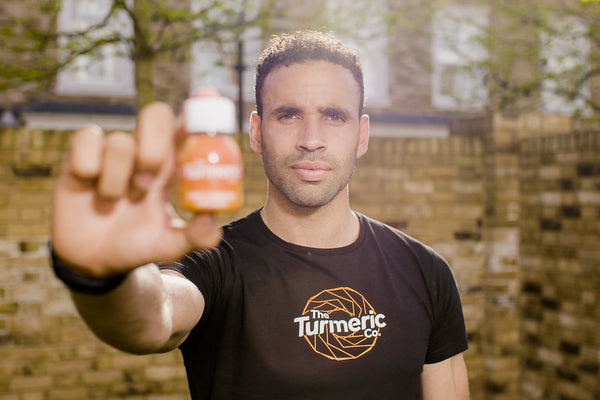
The Hal Robson-Kanu Guide To Fitness & Nutrition
Gain exclusive insight into habits that will make every day a healthy and fulfilling one.