


Vitamin shot vs tablet is a question about delivery rather than about nutrition, and the honest answer is that format matters much less than most marketing implies and much more than the sceptics allow.
The nutrient is the same molecule either way. What changes is how fast it dissolves, what it arrives alongside, and whether you actually take it. That last one decides most outcomes. NHS advice is that everyone in the UK should consider 10 micrograms of vitamin D daily through autumn and winter, in whatever form you will keep up.
Key takeaways
- A vitamin is the same compound in a shot or a tablet. Format changes delivery, not chemistry.
- Liquids skip the disintegration step a tablet has to go through, so they are absorbed faster.
- Faster is not the same as more, and for most vitamins total absorption is broadly similar.
- Fat-soluble vitamins like D3 genuinely benefit from arriving with fats. Tablets often do not provide that.
- The format you take consistently beats the format that is theoretically superior.
What actually differs between a vitamin shot and a tablet?
Three things: how quickly it becomes available, what it arrives with, and how likely you are to take it.
Start with the mechanics. A tablet is a compressed powder that has to disintegrate in your stomach, then dissolve, before anything can be absorbed. A liquid has already done both. That makes a shot faster, and it removes a step that can go wrong with poorly made tablets or with people who have low stomach acid.
Second, what comes with it. Vitamins C, D, E, and the rest do not arrive in a shot on their own. They come with fruit, with the fats and other compounds in the blend, and with whatever else the formulator put in. For fat-soluble vitamins, that matters: vitamin D3, vitamin E, and vitamin A are absorbed better in the presence of fat, which a dry tablet swallowed with water does not supply.
Third, and least glamorous, is adherence. A tablet in a cupboard achieves nothing. Most people are better at a routine involving something they enjoy than one involving something they endure.
| Vitamin shot | Tablet | |
|---|---|---|
| Needs to disintegrate first | No, already in solution | Yes |
| Speed of availability | Faster | Slower |
| Arrives with fats and food compounds | Usually | Rarely |
| Precise, verifiable dose | Yes, if declared | Yes |
| Cost per dose | Higher | Lower |
| Shelf life and portability | Short, needs chilling | Long, room temperature |
Vitamin shot vs tablet: which is better absorbed?
Faster, generally yes. Substantially more absorbed overall, generally no, with fat-soluble vitamins the interesting exception.
This is where the category oversells itself, so let's be careful. For water-soluble vitamins like vitamin C, absorption is governed less by format than by the transporters in your gut, which saturate. Past a certain point you excrete the excess whatever form it arrived in. A liquid gets there sooner. It does not raise the ceiling.
Fat-soluble vitamins are a different case. Vitamin D3 is absorbed along with dietary fat, so taking it with a meal containing fat, or in a product that includes some, gives it a better run than a bare tablet with a glass of water. That is a real, mechanistic advantage for a formulated liquid rather than a marketing claim.
The thing neither format changes is whether you needed the vitamin. Absorption improvements on a nutrient you already have enough of buy you nothing.
Which vitamins are actually worth supplementing in the UK?
Vitamin D through autumn and winter, for everybody. Most of the rest depends on your diet.
The NHS advice on vitamin D is unusually clear for public health guidance: from about October to March, UK sunlight is not strong enough for your skin to make what you need, so everyone should consider a daily 10 microgram supplement. That is 400 international units, and it applies whatever format you choose.
Vitamin D also has the better evidence base of the two nutrients people buy shots for. An updated review in the Lancet Diabetes and Endocrinology pooling 43 trials found a protective effect against acute respiratory infection, with the benefit appearing where vitamin D was taken daily at 400 to 1,000 international units, which is exactly the range NHS advice sits in.
Vitamin C is more nuanced. A Cochrane review of 29 trial comparisons in 11,306 people found regular vitamin C did not stop people in the general community catching colds, but did shorten them by around 8% in adults, and roughly halved the risk in 598 marathon runners, skiers, and soldiers under extreme physical stress. The NHS guidance on vitamin C covers how much you need and where it comes from in food.
What we make, and what was tested
Our immunity blend puts both nutrients in a liquid, and it is the one our own research used.
Raw Turmeric Vitamin C & D3 carries a Lipoturm© blend at 9%, which contains vitamin C, vitamin D3, vitamin E, and sunflower lecithin, alongside watermelon at 39%, pineapple, ginger root, lemon, turmeric root at 7%, and pomegranate. Turmeric is deliberately not the headline in this one, and we would rather say so than imply otherwise.
Independent researchers ran a study on 23 professional footballers taking one of these a day through a competitive season. The players on the shots recorded 3.9 days of upper respiratory illness per 1,000 player days against 10.6 in the control group, alongside less gut discomfort and a lower blood level of I-FABP, a marker released when the gut lining is under stress. We funded that work and had no part in the analysis. It is a small study in young athletes under heavy training load, and it is the most encouraging thing we have.
When is a tablet the better choice?
When cost, portability, or a specific high dose is what you need.
We are not going to pretend otherwise. A vitamin D tablet is cheap, lasts two years in a drawer, travels anywhere, and delivers exactly the 10 micrograms NHS advice suggests. If that is the whole of what you want, a tablet does it well and a shot is an expensive way to achieve the same thing.
Where a shot earns its place is when you want the nutrients as part of something you look forward to, arriving with fruit and fats rather than alone, in a routine you will keep through a dark February. That is a genuine difference, and it is a different purchase from a bottle of tablets.
The takeaway
Vitamin shot versus tablet comes down to speed, company, and consistency. A liquid is available faster and brings fats and food compounds that fat-soluble vitamins genuinely use. A tablet is cheaper, more portable, and perfectly effective for a single nutrient like vitamin D. Neither changes the underlying chemistry.
If you want the nutrients inside something you will actually finish on a wet Tuesday in November, Raw Turmeric Vitamin C & D3 is our version, and it is the blend our own footballer research was built on.
Frequently asked questions
Are vitamin shots better absorbed than tablets?
Faster, yes, because a liquid skips the disintegration and dissolution a tablet needs. Total absorption is broadly similar for water-soluble vitamins. Fat-soluble ones like D3 do genuinely benefit from arriving with fats.
Do I still need a vitamin D supplement if I take a shot?
Check the declared amount. NHS advice is 10 micrograms a day through autumn and winter. If your shot supplies that, it counts. If it does not declare a figure, assume it does not.
Is a vitamin shot worth the extra money?
Only if the format is what makes you consistent, or if you want the nutrients alongside fruit and fats. For a single nutrient at a fixed dose, a tablet does the same job for far less.
Can you take too much vitamin C in a shot?
Your gut's transporters saturate, so excess water-soluble vitamin C is largely excreted rather than stored. Very high doses can cause stomach upset. NHS guidance covers safe amounts.
Which is better for immunity, vitamin C or vitamin D?
Vitamin D has the stronger trial evidence for respiratory infection, and a national recommendation behind it in the UK. Vitamin C shortens colds modestly, with a bigger effect in people under heavy physical stress.
Do vitamin shots need to be kept in the fridge?
Fresh, unpasteurised ones do, and that is a real difference from tablets. It is the trade-off for a product built on fresh ingredients rather than one engineered for a two-year shelf life.

Raw Turmeric Vitamin C & D3 Shot Box
Our Raw Turmeric Vitamin C & D3 drink is a powerful tropical-flavoured shot to help support immunity and deliver an energy boost when you most need it
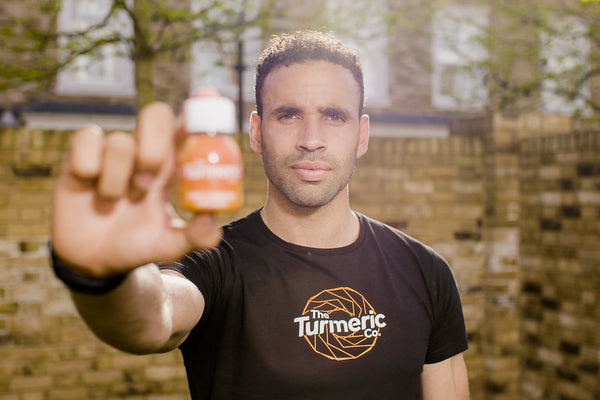
The Hal Robson-Kanu Guide To Fitness & Nutrition
Gain exclusive insight into habits that will make every day a healthy and fulfilling one.