


Stories linking turmeric supplements to liver problems have done the rounds in the last few years, and if turmeric is part of your day, you'll want to know what's behind them.
Turmeric and liver health came under scrutiny after Italy's health authorities received 28 reports of acute hepatitis linked to turmeric supplements in the first half of 2019. Cases like these are rare, mostly involve concentrated, high-strength curcumin products, and usually improve once the supplement is stopped.
Key takeaways
- Liver injury linked to turmeric is rare, and the published cases mostly involve concentrated curcumin supplements rather than turmeric in food or drink.
- Most people recovered after stopping the supplement, though a small number of cases have been serious.
- Some people appear to be more susceptible than others, with one gene variant turning up far more often in those affected.
- Yellowing of the skin or the whites of the eyes needs an urgent GP appointment or a call to NHS 111.
- If you have a liver condition or take prescription medicines, speak to your pharmacist or GP before taking turmeric regularly.
What has been reported about turmeric and liver health?
A small number of cases of liver injury, mostly in people taking concentrated curcumin supplements.
The Italian reports were investigated by a team from the country's national health institute, which analysed the products involved for contaminants, including medicines, heavy metals, and pesticides. In all but one case, the link to the supplement was judged at least possible, and the Italian authorities took regulatory action.
A follow-up from Florence looked at seven cases in Tuscany and 23 more published worldwide. In the Tuscan cases, the supplements were high-dose curcumin formulations designed for high absorption. Across the published cases, most people were also taking at least one other medicine, and 16 improved after stopping the turmeric product.
Drug-induced liver injury is defined as damage to the liver caused by a medicine, supplement, or herbal product. It covers a wide range of substances, and a 2023 review of the field lists turmeric among the herbal products more recently identified as a cause.
| Where the cases came from | Cases | What happened |
|---|---|---|
| Italy's monitoring system, first half of 2019 | 28 | Regulatory action taken after the products were analysed |
| Tuscany, to September 2019 | 7 | Most improved after stopping |
| Published case reports worldwide | 23 | 16 improved after stopping |
| A US liver injury research network, 2004 to 2022 | 10 | Typically appeared after one to four months |
Why do some people react and not others?
Genes seem to play a part, alongside the type of product.
A case series from a US liver injury research network described 10 people, eight of them women, with a median age of 56. Seven of the 10 carried the same gene variant, HLA-B*35:01, which turned up around seven times more often in this group than in the general population. That points to an individual susceptibility rather than a risk that applies to everyone.
The injury typically appeared one to four months after starting. Five of the 10 were admitted to hospital and one died of liver failure, so while these cases are rare, they're taken seriously. Three of the seven products tested also contained piperine, from black pepper, and the authors suggested the rise in cases may reflect how people use turmeric, or more products combining it with black pepper.
Can turmeric help the liver?
The research is still developing, with mixed results so far.
Most of the work is in non-alcoholic fatty liver disease, where fat builds up in the liver. A review of 14 trials found curcumin supplements lowered two liver enzymes, ALT and AST, that rise when the liver is under strain. A Spanish review of 15 trials with 835 people found AST fell but ALT didn't, and both reviews found the trials varied a great deal. These were concentrated supplements, studied in people with a diagnosed condition.
What's clear is what the NHS recommends for a fatty liver. Its advice on non-alcoholic fatty liver disease is a healthy, balanced diet, at least 150 minutes of exercise a week, losing weight if you're overweight, keeping to no more than 14 units of alcohol a week, and not smoking.
What are the warning signs of a liver problem?
Yellow skin or yellow whites of the eyes, often with itchy skin, darker pee, and paler poo.
The NHS advice on jaundice is to ask for an urgent GP appointment or get help from NHS 111 if your skin or the whites of your eyes look yellow. On brown or black skin, the yellowing may be harder to see on the skin, but the whites of the eyes will look yellow.
If you notice any of these while taking a turmeric supplement, stop taking it and get medical advice, and take the product with you or note its name and dose.
Who should check before taking turmeric?
Anyone with a liver condition, and anyone on prescription medicines.
Liver UK's advice on supplements is that if you have a liver condition, you should always talk to your doctor before taking any herbal supplement, as some can damage the liver. The same goes for anyone taking prescription medicines, since many are processed by the liver. Speak to your pharmacist or GP before taking turmeric regularly.
Our guide to turmeric side effects covers the wider picture, and turmeric and warfarin explains one of the best-known medicine questions.
Is a turmeric shot the same as a curcumin supplement?
No. The published cases involve concentrated supplements, and a shot is a juiced food.
Curcumin supplements are made to deliver hundreds of milligrams of curcumin in a capsule, and the Tuscan cases involved formulations built for high doses and high absorption. A juiced shot carries far less curcuminoid than an extract capsule. For scale, EFSA sets an acceptable daily intake for curcumin of 3mg per kilogram of body weight, about 210mg a day for someone weighing 70kg.
Direct evidence on drinks like ours is limited, though, and the cases show some people are more sensitive than others. So if you have a liver condition or take prescription medicines, speak to your pharmacist or GP before taking a shot regularly.
Which shot fits a daily routine?
One made from whole food, taken once a day with breakfast.
Raw Turmeric Original is raw turmeric root at 30%, the most in our range, cold-crushed with whole watermelon, pineapple, and lemon, with magnesium and vitamin C added. It also carries our trade-secret BioMax Uptake Blend®, which includes black pepper, at a 0.1% inclusion. Every ingredient is on the label, so you or your pharmacist can see exactly what's in it.
It's also the shot independent researchers at Nottingham Trent University gave professional footballers in the first clinical trial of our blends, which found lower inflammation after matches. We're clearly not a neutral party.
The takeaway
Turmeric and liver health is a fair question, and the honest answer is that liver injury linked to turmeric is rare, mostly involves concentrated curcumin supplements, and usually improves when the product is stopped. Some people appear more susceptible than others, so yellowing skin or eyes always needs an urgent GP appointment or NHS 111, and anyone with a liver condition or on prescription medicines should check with a pharmacist or GP first.
For everyone else, a single Raw Turmeric Original with breakfast is a whole-food way to make turmeric part of your day.
Frequently asked questions
Can turmeric damage your liver?
Rarely. A small number of cases of liver injury have been linked to turmeric, mostly to concentrated curcumin supplements, and most people recovered after stopping. Some people appear to be more susceptible than others.
Is turmeric good for a fatty liver?
Trials of curcumin supplements in fatty liver disease have found some improvement in liver enzymes, but the results are mixed. The NHS recommends diet, exercise, and weight loss as the main ways to help.
What are the signs of liver problems?
Yellowing of the skin or the whites of the eyes is the main sign to watch for, often with itchy skin, darker pee, and paler poo. Ask for an urgent GP appointment or contact NHS 111.
Can I take turmeric if I have a liver condition?
Speak to your doctor first. Liver UK advises anyone with a liver condition to check before taking any herbal supplement.
How long after starting could a problem appear?
In the US case series, liver injury typically appeared one to four months after starting a turmeric product.
Is turmeric in food a concern for the liver?
The published cases involve supplements rather than turmeric used in cooking. If you have a liver condition, mention any supplements or daily shots you take to your doctor.

Raw Turmeric Original Shot Box
Our Original Turmeric Shot packs a real punch thanks to a whopping 35g of fresh raw turmeric root used to make each shot.
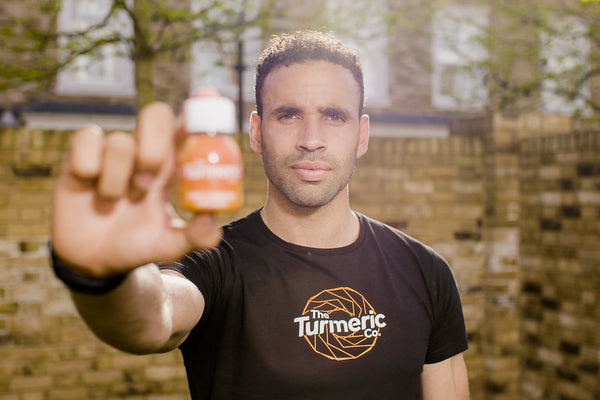
The Hal Robson-Kanu Guide To Fitness & Nutrition
Gain exclusive insight into habits that will make every day a healthy and fulfilling one.