


Turmeric and iron absorption is one of the few cautions about turmeric with real evidence behind it, and it gets far less attention than a lot of claims that have none.
Curcumin binds iron. A study published in Blood showed curcumin acts as a biologically active iron chelator, and in mice fed low-iron diets for 26 weeks it produced dose-dependent falls in haemoglobin, haematocrit, and serum iron. This is a mechanism, not a scare, and the dose matters enormously.
Key takeaways
- Curcumin binds iron in the gut, which can reduce how much you absorb from food.
- The clearest effects come from concentrated supplements, not from turmeric used in cooking.
- A single published human case linked six high-dose extract capsules a day to iron deficiency anaemia.
- It matters most if your iron stores are already marginal, not if they are healthy.
- Anyone taking iron tablets, or with diagnosed anaemia, should speak to their GP or pharmacist.
How do turmeric and iron absorption interact?
Yes, by binding iron in the gut so less of it is available to absorb. The size of that effect depends almost entirely on how much curcumin is involved.
The mechanism is well characterised. Curcumin is a chelator, meaning it binds metal ions, and iron is one of them. Bound iron in the gut is not free to be absorbed across the intestinal wall, so it passes through.
The animal work is where the effect was demonstrated most clearly. In that Blood study, mice were fed diets with graded amounts of both iron and curcumin for 26 weeks. Against a background of borderline iron deficiency, curcumin produced dose-dependent declines in haematocrit, haemoglobin, serum iron, and transferrin saturation, along with small, pale red blood cells and reduced iron stores in spleen and liver. It also suppressed hepcidin, the hormone that regulates iron balance across the body.
The crucial finding is the conditional one. Mice with adequate iron were largely unaffected. The problems appeared where iron stores were already marginal. That is the shape of this risk in a sentence: curcumin does not create an iron problem, it can worsen one you already have.
Is there any human evidence?
One published case report, which is worth knowing about and worth not overinterpreting.
A case report in Cureus describes a 66-year-old doctor who treated an osteoarthritis flare by taking six turmeric extract capsules, 538mg each, every day. His haemoglobin stayed below 12 and his iron and ferritin readings were consistent with iron deficiency. Endoscopy above and below found no bleeding to explain it. Two weeks after stopping the turmeric, while continuing his usual iron supplement, his haemoglobin returned to normal and his iron studies began normalising.
The authors described it as possibly the first documented human case of iron deficiency anaemia caused by turmeric supplements. That framing carries its own caveat: one case is one case. It cannot tell you how common this is, and it is not a controlled study.
What makes it worth reporting is the arithmetic. Six capsules at 538mg is more than three grams of turmeric extract daily, sustained. That is a long way from a spoonful of turmeric in a curry, and the distinction is the whole point.
| Level of intake | Realistic iron concern |
|---|---|
| Turmeric as a spice in cooking | Very low |
| A whole-root turmeric drink | Low |
| A standard curcumin supplement | Worth knowing about if your iron is marginal |
| Multiple high-dose extract capsules daily | The situation in the published case |
Who should actually be careful?
Anyone with low iron stores, anyone taking iron tablets, and anyone in a group prone to deficiency.
That covers more people than you might expect. Iron deficiency is common, and the NHS guidance on iron deficiency anaemia sets out who is most at risk: people with heavy periods, people who are pregnant, people with certain gut conditions, and anyone whose diet is low in iron. Vegetarian and vegan diets need more attention here too, since non-haem iron from plants is less readily absorbed to begin with.
If you take prescribed iron tablets, the practical advice is straightforward and applies to tea and coffee as much as to turmeric: separate them. Taking iron a couple of hours apart from anything that binds it gives it a clear run. The NHS guidance on iron covers how much you need and where it comes from.
This is safety information, so we are not going to soften it: if you have diagnosed anaemia or you are being monitored for low iron, raise turmeric supplements with your GP or pharmacist rather than assuming they are irrelevant.
Does this apply to a turmeric shot?
Much less than to an extract capsule, and the reason is the amount.
Our shots are cold-crushed whole-root blends. Raw Turmeric Original carries turmeric root at 30%, the most in our range, but whole root contains only a few percent curcuminoids by weight, so the curcumin in a shot is a small fraction of what a concentrated extract capsule delivers. The published case involved more than three grams of extract a day.
We are not going to claim the effect is zero, because that would be inventing a number nobody has measured. Nobody has tested turmeric beverages against iron status. What can be said is that the mechanism is dose-dependent, the evidence of harm sits at supplement doses, and food-level amounts have not been implicated.
If your iron is already low, the sensible move is still to mention it to whoever is managing that.
How would you know?
Tiredness, breathlessness, and pallor, though the only reliable answer is a blood test.
The symptoms of iron deficiency are unhelpfully vague: fatigue, shortness of breath, noticeably pale skin, headaches, brittle nails. Plenty of things cause those. What settles it is a full blood count and iron studies, which a GP can arrange.
If you have been feeling persistently tired and you are taking a concentrated turmeric supplement, that is worth mentioning at the appointment rather than treating as two unrelated facts. It is a cheap thing to check and an easy thing to reverse.
The takeaway
Turmeric and iron absorption is a real interaction, driven by curcumin binding iron in the gut. It has been demonstrated in animals and reported in one human case involving more than three grams of extract a day. It matters most for people whose iron stores are already marginal, and hardly at all for turmeric used as food.
If you are in an at-risk group or you take iron tablets, space them apart and mention it at your next appointment. And if you want turmeric as a daily habit rather than as a high-dose supplement, Raw Turmeric Original delivers it as whole root in a food format, which is the version this evidence has never implicated.
Frequently asked questions
Does turmeric block iron absorption?
Curcumin binds iron in the gut, which reduces how much is available to absorb. The effect is dose-dependent, well demonstrated in animals, and reported in one human case involving high-dose extract capsules.
Can turmeric cause anaemia?
One published case linked six turmeric extract capsules daily to iron deficiency anaemia, which resolved after stopping. That is a single case, not a common outcome, and it involved more than three grams of extract a day.
Should I stop turmeric if I take iron tablets?
Not necessarily, but separate them by a couple of hours, as you would with tea or coffee. If you are being treated for anaemia, raise it with your GP or pharmacist rather than deciding alone.
Is turmeric in food a problem for iron?
Very unlikely. The evidence of harm sits at concentrated supplement doses. Turmeric used as a spice in cooking has not been implicated, and the amounts involved are far smaller.
Who is most at risk from this?
People whose iron stores are already marginal: those with heavy periods, in pregnancy, with certain gut conditions, or on diets low in absorbable iron. Animal work found little effect where iron status was adequate.
How do I know if my iron is low?
Symptoms like tiredness, breathlessness, and pallor are vague and have many causes. A full blood count and iron studies from your GP is the only reliable answer, and it is a quick test to arrange.

Raw Turmeric Original Shot Box
Our Original Turmeric Shot packs a real punch thanks to a whopping 35g of fresh raw turmeric root used to make each shot.
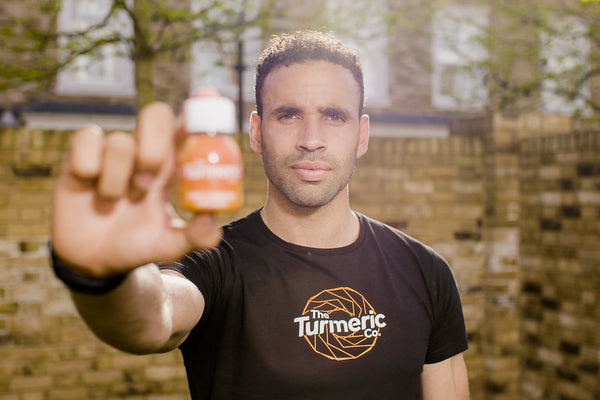
The Hal Robson-Kanu Guide To Fitness & Nutrition
Gain exclusive insight into habits that will make every day a healthy and fulfilling one.