


If you've ever come back from a sunny holiday looking radiant, only to notice a few weeks later that your skin seems tighter, duller, or somehow less "bouncy," there's a reason why.
Prolonged sun exposure is one of the fastest ways to break down your skin's collagen, and summer is when the damage quietly adds up. UV radiation switches on enzymes that dismantle collagen faster than your body can rebuild it.
The good news? A few simple, plant-based habits can help your skin fight back.
Why UV is collagen's biggest summer enemy
Think of collagen as the scaffolding holding your skin's structure together. Sunlight doesn't just fade that scaffolding - it actively attacks it.
UV exposure triggers enzymes called matrix metalloproteinases (MMPs), and research has shown that UV radiation increases MMP activity in human skin, breaking down the collagen network faster than your body can lay down new fibres.
This isn't just a one-off holiday problem, either. It's cumulative.
Studies looking at chronic sun exposure have found that repeated UV exposure over the years leads to fragmented, disorganised collagen - the kind of damage that often doesn't show up as sagging or fine lines until well after the summer that caused it.
In other words, the effects of a fortnight of sun-soaked lunches and long evenings outside might not clock in until autumn. That delay is exactly why it's easy to underestimate how much protection your skin actually needs in the moment.
The turmeric connection: can it help protect elasticity?
This is where turmeric's active compound, curcumin, comes into the picture.
Curcumin is studied as a potent antioxidant, and antioxidants are one of the body's main lines of defence against the oxidative stress that UV exposure creates in skin cells. Some research has suggested that curcumin may help protect skin cells from UV-induced damage, potentially supporting the skin's natural resilience against sun-related collagen breakdown.
It's worth being upfront here: turmeric is not a substitute for sunscreen, and no food or supplement can undo direct UV damage after the fact.
But woven into a broader, antioxidant-rich diet, turmeric is reported to lend the body a hand against the everyday oxidative stress that a British summer (heatwaves and all) throws at your skin.

Does vitamin C help collagen production in the heat?
Of everything discussed here, this is one of the few things science is genuinely settled on.
Vitamin C isn't just "good for the immune system" - it's a direct, essential cofactor in collagen synthesis, playing a role in stabilising the collagen molecule as it's built. Put simply: without enough vitamin C, your body physically cannot make strong, well-formed collagen.
Summer is actually a smart time to pay closer attention to how much you're getting. Sweating, longer days and higher activity levels can all increase how quickly the body uses up water-soluble vitamins like C. The easiest fix is leaning into naturally plant-based sources - think berries, peppers, kiwi and citrus - or building in a daily Raw Turmeric & Vitamin C+D3 shot so it's one less thing to think about.
Simple, plant-based habits for summer-proof skin
None of this needs to be complicated. A few small adjustments through the sunniest months can make a real difference to how your skin holds up:
- Seek shade during peak UV hours (11am–3pm) rather than relying on sunscreen alone
- Fill your plate with colour - berries, tomatoes, peppers and leafy greens are packed with antioxidants and vitamin C
- Stay properly hydrated; dehydrated skin shows the visible effects of UV stress far more readily
- Reapply a mineral SPF regularly, even when it's cloudy or overcast
- Try a daily Raw Turmeric & Pro-Collagen shot, combining cold-crushed raw turmeric with plant-based collagen support and vitamin C, for a consistent, food-first way to nourish skin through summer

The takeaway
Summer sun is one of the biggest accelerants of collagen breakdown out there, thanks to UV-triggered enzymes that outpace your skin's natural repair process - often without you noticing until weeks later.
Turmeric's antioxidant properties are reported to offer some support against that oxidative stress, while vitamin C plays a proven, direct role in collagen formation. Neither replaces sun protection, but paired with one, a plant-based, antioxidant-rich diet gives your skin the best possible chance of bouncing back — not just looking sun-kissed, but actually staying resilient underneath.
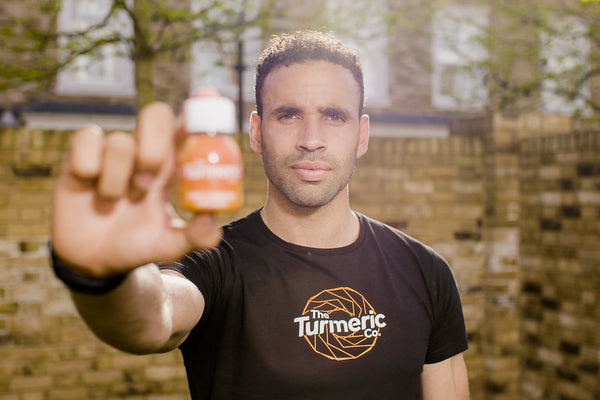
The Hal Robson-Kanu Guide To Fitness & Nutrition
Gain exclusive insight into habits that will make every day a healthy and fulfilling one.