


Collagen benefits are sold hard and studied unevenly, so it's worth separating what your body does with collagen from what a supplement can add to it.
Collagen is the most abundant protein in the body, and production falls steadily from your mid-twenties. A meta-analysis of 19 randomised trials in the International Journal of Dermatology found hydrolysed collagen improved skin hydration, elasticity, and wrinkles across 1,125 participants, with 90 days the effective duration. Vitamin C is required to build collagen at all.
Key takeaways
- The skin evidence is the strongest part of the collagen story, and it holds up across two separate meta-analyses.
- Trials run around 90 days, so nothing here is judged fairly in a fortnight.
- Vitamin C is not optional. Your body cannot form collagen normally without it.
- Vegan collagen support works differently from marine or bovine peptides, by supplying building blocks rather than collagen itself.
What is collagen, and what does it do?
It's the structural protein that holds you together, and there's more of it in you than any other protein.
Collagen is defined as a family of fibrous structural proteins that form the scaffolding of skin, tendons, ligaments, cartilage, bone, and blood vessel walls. Its triple-helix structure is what gives tissue tensile strength, and it's why skin springs back when you press it and why a tendon can take load without tearing.
There are more than twenty types. Three matter for most purposes: type I in skin, bone, and tendon, type II in cartilage, and type III alongside type I in skin and blood vessels.
Your body makes its own, continuously, from amino acids. Production peaks young and declines from the mid-twenties, faster after the menopause, and faster again with sun exposure and smoking. That decline is the reason the supplement category exists.
| Collagen claim | What the pooled trials support |
|---|---|
| Improves skin hydration and elasticity | Yes. Two meta-analyses covering more than 2,800 participants agree |
| Reduces the appearance of wrinkles | Yes, in the 19-trial review, after 90 days of daily use |
| Eases joint pain | Yes, short term. A BJSM review ranked collagen among its strongest supplements for pain |
| Strengthens hair and nails | Limited. A few small trials on nail growth, little on hair |
| Applies directly to skin in a cream | No. Collagen molecules are too large to cross the skin barrier |
The collagen benefits the trials actually support
Skin is where the research is strongest, and even there the effects are real but modest.
The International Journal of Dermatology meta-analysis above pooled 19 randomised, double-blind trials covering 1,125 participants and found hydrolysed collagen improved skin hydration, elasticity, and wrinkles against placebo, concluding that 90 days of daily use is effective. A later meta-analysis in Nutrients, pooling 26 randomised trials in 1,721 people, reached the same conclusion on hydration and elasticity, and called for larger trials to firm the picture up.
The proposed mechanism is not that swallowed collagen is delivered whole to your face. It's broken down in digestion like any protein, and the peptides that survive are thought to act as a signal to the cells that build collagen, as well as supplying the raw material.
Timeframes in this research are consistent: around 90 days of daily use before anything is measured. Skin turns over slowly, so that's a fair test rather than a stalling tactic.
Does collagen help joints?
Better than its reputation, in the short term at least, and the longer-term evidence is still developing.
A systematic review in the British Journal of Sports Medicine covering 20 supplements across 69 randomised trials in osteoarthritis found that seven of them produced large, clinically important reductions in pain in the short term. Collagen hydrolysate was one. Curcumin and turmeric root extract were two others, which is worth knowing about a shot that carries both.
The limits belong in the same breath. The reviewers rated the overall quality of evidence as low, and no supplement in the review showed a clinically important effect on pain at long-term follow-up. Glucosamine and chondroitin, the two most widely sold options in this category, came out either ineffective or with effects too small to matter.
We've gone through the joint side properly in collagen for joints.
For osteoarthritis specifically, NICE guideline NG226 puts exercise and weight management first, and that ordering is the right one.
Vegan, marine, or bovine collagen
They're genuinely different products, and only one of them isn't collagen at all.
Marine collagen comes from fish skin and scales, and is mostly type I, which is the type in skin. Bovine collagen comes from cattle hide and bone, and supplies types I and III. Both are hydrolysed into short peptides so they survive digestion, and both are what the skin trials above tested.
Vegan collagen is a different proposition, and the name is a shorthand rather than a description. No plant makes collagen. What vegan formulations supply is the amino acid profile of human collagen, together with the cofactors your own cells need to build it: vitamin C above all, plus zinc and often botanical extracts. VeCollal®, the ingredient we use, is built on that principle.
Which suits you depends on what you want. Hydrolysed peptides carry the direct trial evidence. The vegan route supplies the raw material and the cofactors instead, which is the option if you'd rather not take an animal product, and it respects the fact that your own cells do the manufacturing either way.
Why vitamin C is not optional
Because without it, the collagen your body makes doesn't hold its shape.
Vitamin C is a required cofactor for the enzymes that stabilise the collagen triple helix. That isn't a marketing line, it's basic biochemistry, and it's the reason scurvy causes bleeding gums and wounds that won't close. The NHS page on vitamin C puts the adult requirement at 40mg a day and lists helping wound healing and keeping skin and blood vessels healthy among its jobs.
Protein intake is the other half. Collagen is made from amino acids, so a diet short on protein limits what your body can build. The British Nutrition Foundation guidance on protein covers the amounts and the sources.
Zinc contributes to the maintenance of normal skin, hair, and nails, which is why it turns up in this category too.
Where a daily shot fits
As one habit that covers the building blocks, the cofactors, and the anti-inflammatory side, in ten seconds.
Raw Turmeric & Pro-Collagen is the blend built for this. It's a cold-crushed, whole watermelon-based shot with beetroot, pomegranate, raw turmeric root at 10%, raspberry, ginger root, and dragon fruit, carrying vegan Pro-Collagen with VeCollal®, plus zinc and vitamin C, and our trade-secret BioMax Uptake Blend®, which includes black pepper.
Vitamin C contributes to normal collagen formation and zinc to the maintenance of normal skin, so those two are doing declared, established jobs rather than implied ones. The raw turmeric root brings the inflammation research we've written about in turmeric for skin.
Whatever you choose, take it daily and give it three months. That's the timeframe the trials used, and it's the timeframe our own customers who see a difference tend to describe.
The takeaway
Collagen is worth understanding rather than worshipping. It's the scaffolding of skin, cartilage, and tendon, it declines with age and sun exposure, and the pooled trials support a modest improvement in skin hydration and elasticity from taking it daily for a couple of months.
The joint findings are shorter term and the evidence there is still developing, creams don't work because the molecule is too large to get in, and none of it substitutes for sunscreen, sleep, protein, and enough vitamin C.
If you want the sensible version of all of this in one daily habit, Raw Turmeric & Pro-Collagen puts vegan Pro-Collagen, vitamin C, and zinc alongside raw turmeric root and black pepper. One shot, first thing, for three months, and then judge it.
If you have joint pain that's getting worse, or skin that's painful or changing, see your GP rather than reaching for a supplement.
Frequently asked questions
Do collagen supplements actually work?
For skin, two meta-analyses covering more than 2,800 participants found improvements in hydration and elasticity, with wrinkles improving too in the 19-trial review, after around 90 days of daily use. For joints, a British Journal of Sports Medicine review ranked collagen hydrolysate among the supplements with the largest short-term effects on pain, while rating the overall evidence quality as low.
How long does collagen take to work?
Around 90 days in the skin trials, which is also a fair personal test. Skin turns over slowly and cartilage more slowly still, so anything promising results in days is describing something other than collagen synthesis.
Is vegan collagen as good as marine collagen?
They work differently. Marine and bovine peptides are hydrolysed collagen, and they're what most of the trial evidence used. Vegan formulations supply the amino acids of human collagen plus the cofactors your cells need to build it, which suits anyone avoiding animal products. Both depend on adequate vitamin C.
Does vitamin C help collagen?
It's essential to it. Vitamin C is a required cofactor for the enzymes that stabilise collagen's structure, so without enough of it your body cannot form collagen normally. UK adults need 40mg a day, and getting that from food or a supplement matters more than the brand of collagen you choose.
Can I get collagen from food?
You get the amino acids to build it from any adequate protein intake, and connective tissue foods like bone broth, chicken skin, and oily fish with the skin on supply collagen directly. There's no strong trial evidence that broth matches a measured supplement, but a decent protein intake genuinely does underpin the whole thing.
Do collagen creams work?
Not for adding collagen. The molecule is far too large to cross the skin barrier, so a collagen cream moisturises rather than replenishes. Sunscreen protects the collagen you already have, which is the single most effective thing anyone can do for skin ageing.
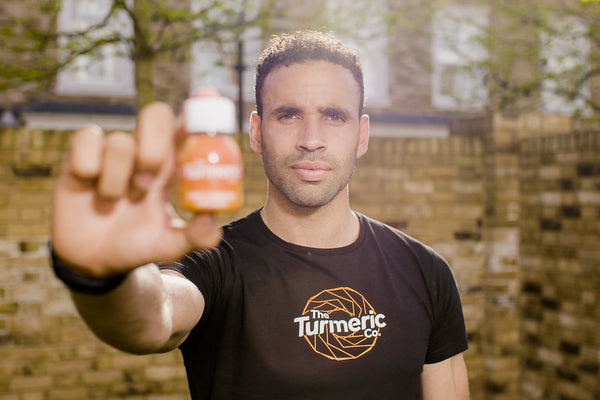
The Hal Robson-Kanu Guide To Fitness & Nutrition
Gain exclusive insight into habits that will make every day a healthy and fulfilling one.