


Ginger shot benefits get claimed generously and evidenced rarely, so here is the version with the trials attached: what the gingerols do, what they don't, and what a shot has to contain before any of it applies to you.
The best-supported benefit is relief from nausea. A meta-analysis of 14 randomised trials in 1,506 patients found ginger significantly lowered nausea scores at 2, 6, and 12 hours after surgery. Joint pain has decent supporting evidence, digestion has a plausible mechanism, and several popular claims have very little.
Key takeaways
- Gingerols are the pungent compounds in fresh ginger root, and they're what the research is built on.
- Nausea relief is the strongest benefit, replicated across surgery and pregnancy trials.
- Ginger reduces the sensation of nausea, but the pooled trials did not find it reduces vomiting.
- Osteoarthritis pain and disability both improved modestly in a meta-analysis of five trials.
- Heat and drying turn gingerols into shogaols, so a fresh cold-crushed shot and a hot tea are not the same drink.

What are the real ginger shot benefits?
Nausea relief, modest joint pain relief, and faster gastric emptying. Those three have trial evidence behind them, and the rest is mostly enthusiasm.
Ginger shot benefits are defined here as effects observed in randomised controlled trials of oral ginger, rather than effects attributed to ginger by tradition. That distinction matters, because ginger has been used for so long and for so many things that the folklore vastly outruns the data.
Start with nausea, because it's the clearest. Beyond the surgical trials above, a meta-analysis of 13 studies covering 1,174 pregnant women found ginger significantly reduced how severe nausea felt compared with placebo, and performed comparably to vitamin B6. A separate systematic review of 12 randomised trials in 1,278 women in Nutrition Journal reached the same conclusion, and found no raised risk of miscarriage, heartburn, or drowsiness.
Now the caveat that honest copy has to carry: all three of those analyses looked for an effect on vomiting, and none of them found a significant one. Ginger changes how sick you feel. It does not reliably stop you being sick. Those are different promises, and only the first one is supported.
On joints, a meta-analysis of five placebo-controlled trials in 593 people with osteoarthritis, published in Osteoarthritis and Cartilage, found significant reductions in both pain and disability. The effect sizes were small, the authors judged the evidence moderate quality, and they noted participants on ginger were more than twice as likely to stop treatment because of side effects. Modest and real is still a better place to be than most things in this aisle.
| Claimed benefit | What the trials actually show |
|---|---|
| Less nausea | Supported. Lower nausea scores across surgery and pregnancy trials |
| Less joint pain | Supported, modestly. Significant pain and disability reductions in osteoarthritis |
| Faster digestion | Supported mechanistically. Gastric half-emptying roughly halved |
| Detox or cleansing | No trial evidence. Your liver and kidneys do this already |
| An energy boost | No trial evidence. Any lift is the sugar in the fruit base |
What do gingerols do that dried ginger doesn't?
Gingerols are the fresh root's active compounds, and heat converts them into something chemically different.
This is the detail most articles skip, and it's the one that should change what you buy. A review of gingerols and shogaols in Phytochemistry explains that gingerols are the major pungent principles of the fresh rhizome, and that they're thermally unstable: heating and drying dehydrate them into shogaols, which carry the sharper heat of dried ground ginger.
That's why a fresh, cold-crushed shot is a genuinely different product from ginger tea or a powdered supplement, and why the storage instructions on a bottle tell you something real. Powder is for flavour and for cooking. If you want the compound profile the nausea trials mostly used, you want the fresh root kept cold.

Can you take a ginger shot on an empty stomach?
Yes, and for most people first thing in the morning is the easiest time to make it stick.
There's no evidence you need food alongside a ginger shot, and there's a decent mechanistic reason it sits well without one. A randomised double-blind study of 24 healthy volunteers in the European Journal of Gastroenterology and Hepatology found ginger cut gastric half-emptying time from 26.7 minutes to 13.1 minutes, and increased the contractions that move food through the stomach. Ginger encourages your stomach to get on with it.
The practical answer is less about biology and more about habit. A shot taken before anything else in the day is a shot you don't forget. If you find the heat uncomfortable on an empty stomach, and some people do, take it with breakfast instead. Neither is wrong, and consistency matters far more than timing.
How much ginger do you actually need?
The trials mostly used between 500mg and 2,000mg of ginger a day, and the pregnancy evidence favoured the lower end.
That range is worth holding onto, because it's the difference between a product doing something and a product gesturing at it. The Nutrition Journal review found subgroup results favouring under 1,500mg a day for nausea relief, and the motion sickness and surgical work generally used 1,000mg to 2,000mg.
What this means in a shop is simple: read the ginger percentage on the label. A shot that lists ginger somewhere after the apple juice is not going to reach those amounts, however golden it looks.

Who should check before making it a habit?
Anyone on blood thinners, anyone with gallstones, and anyone with an operation coming up.
Ginger may affect clotting when taken in large amounts, and a systematic review in the British Journal of Clinical Pharmacology covering 78 foods, herbs, and supplements named it among those carrying an increased bleeding risk alongside warfarin. So if you take warfarin, clopidogrel, or another anticoagulant or antiplatelet, speak to your pharmacist or GP before you start a daily shot. Gallstones are worth mentioning too. And if you're pregnant, the evidence is reassuring, but the decision belongs with your midwife, not with us.
The NHS guidance on motion sickness recommends trying ginger for journeys, which is a fair signal about how the risk profile is generally viewed for healthy adults.
Where our own blends sit
We don't make a pure ginger shot, and it's worth saying so plainly.
Everything we make is turmeric led, because turmeric and ginger are studied on overlapping ground and we'd rather give you both roots than pick one. Raw Turmeric & Ginger carries ginger root and turmeric root at 15% each in a cold-crushed watermelon base, with magnesium and vitamin C, and it's our mobility blend. Raw Turmeric & XTRA Ginger takes ginger to 30%, which makes it the one for ginger superfans rather than a stronger shot across the board. Both carry our trade-secret black pepper mix, BioMax Uptake Blend®, declared at 0.1%.
If you want the wider category picture, our guide to what a ginger shot is covers the format, and the benefits of fresh ginger covers the root itself rather than the shot.
The takeaway
Ginger shot benefits are real, specific, and smaller than the marketing implies, which is the most useful thing anyone can tell you. Nausea relief is well evidenced. Joint pain relief is modest and genuine. Digestion has a clear mechanism. Detoxing and energy are not on the list.
The compounds behind all of it are fragile, so a benefit only reaches you if the ginger is fresh, cold-crushed, and taken often enough to count. That's the case for a blend you'll actually finish, and Raw Turmeric & Ginger is the one we'd hand you first.
Frequently asked questions
What are the main ginger shot benefits?
Less nausea, modestly less joint pain, and faster gastric emptying. Those three have randomised trial evidence. Claims about detoxing, immunity boosting, or energy don't have equivalent support, whatever the bottle says.
Can you take a ginger shot on an empty stomach?
Yes. There's no reason you need food with it, and ginger speeds gastric emptying rather than slowing it. First thing in the morning is the easiest time to remember. If the heat is uncomfortable without food, take it with breakfast.
How long do ginger shot benefits take to appear?
Nausea relief is measured in hours in the trials. Joint pain trials ran for weeks to months. Treat it as a habit rather than a dose, and give it eight to twelve weeks before you judge it.
Do ginger shots stop vomiting?
No, and this is where the evidence is clearest about its own limits. Pooled trials in surgical and pregnancy settings found ginger reduced nausea scores but showed no significant effect on vomiting episodes.
Is ginger better fresh or dried?
For the compounds in the research, fresh. Gingerols are thermally unstable and convert to shogaols when heated or dried. Dried ginger is excellent for cooking, and a different chemical proposition from a cold-crushed shot.
Can you have too much ginger?
The trials mostly stayed between 500mg and 2,000mg a day, and the osteoarthritis meta-analysis found people on ginger were twice as likely to stop because of side effects. If it's uncomfortable, take less or take it with food.

Raw Turmeric & Ginger Shot Box
Combining two ‘super roots’ in turmeric and ginger makes this a naturally potent shot combination.
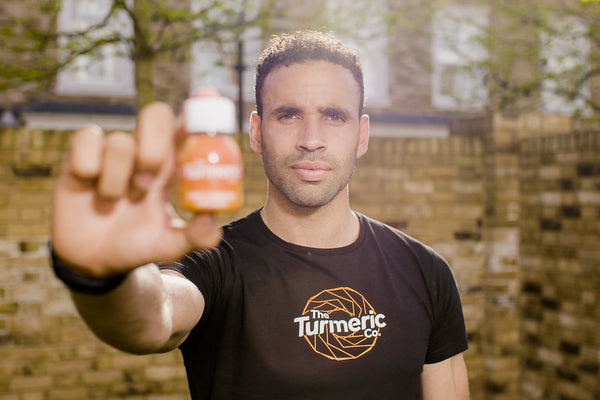
The Hal Robson-Kanu Guide To Fitness & Nutrition
Gain exclusive insight into habits that will make every day a healthy and fulfilling one.